Makeup brushes and sponges need a wash about once a week with lukewarm water and a gentle soap. One rule protects the tool itself: keep the base of the bristles, where they are glued to the handle, out of the water, because soaked glue lets bristles shed. Clean tools also hold less oil and debris than dirty ones.
The hygiene case is documented. In a 2020 study in the Journal of Applied Microbiology, 79 to 90 percent of tested used cosmetic products carried bacteria, and 93 percent of collected beauty blenders had never been cleaned.
How often should you clean makeup brushes?
Weekly is the interval working makeup artists describe. Makeup artist Kat Sketch suggests most people wash their brushes every week, and Bobbi Brown, the founder of a namesake beauty line, washes her own brushes once per week. Eye tools get a slightly longer interval, since Brown cleans brushes used around the eyes at least twice a month. One expert told Allure that visible makeup on a brush is its own signal that a wash is due.
What do you need to clean brushes?
Three items cover it: lukewarm water, a gentle cleanser, and a clean towel or paper towel. A gentle soap works, and the magazine notes that regular soaps and rubbing alcohol can dry out bristles, especially natural hair. One expert interviewed by Allure prefers sulfate-free shampoo, to avoid residue that could sit on the brush and transfer back to skin.
How do you clean brushes step by step?
The method below is the documented routine from Allure. The wash takes a few minutes per brush, and the rinsing step matters as much as the lathering. For related coverage, see Makeup for Beginners: A Five-Step Routine That Takes Ten Minutes.
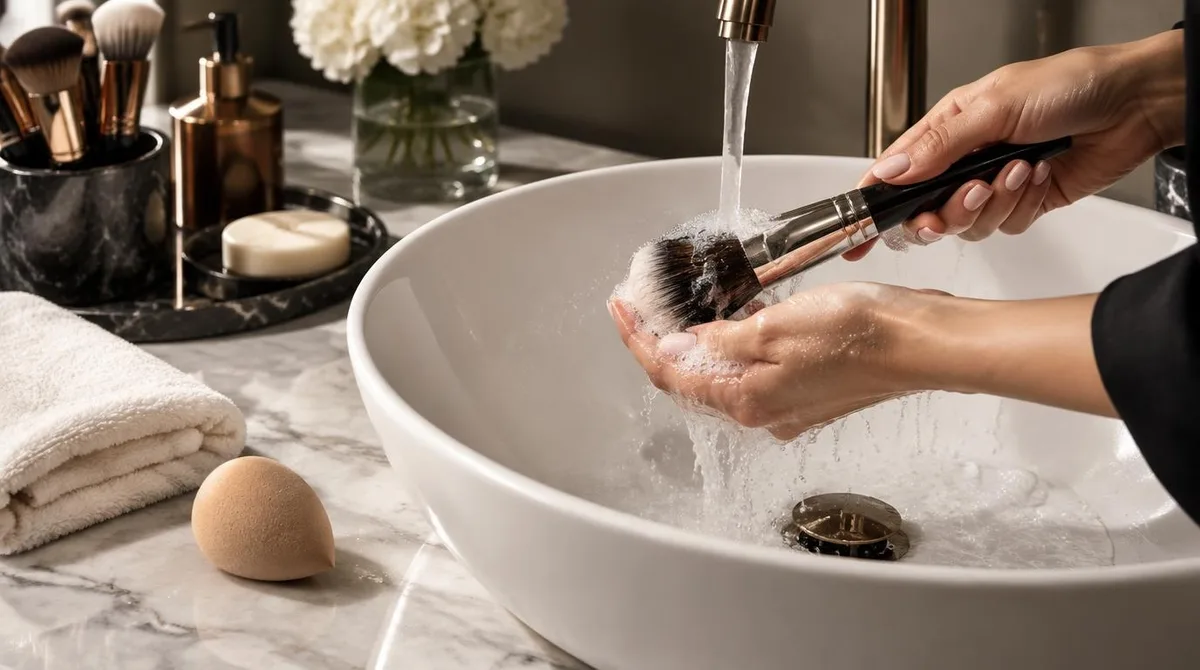
- 1. Wet the bristles with warm water, keeping the base away from the stream.
- 2. Place a drop of the chosen cleanser into the palm of a clean hand.
- 3. Gently create a lather and massage the tips of the bristles in the palm to lift out makeup.
- 4. Rinse the bristles thoroughly.
- 5. Squeeze out the excess moisture with a clean paper towel.
- 6. Re-form the brush head into its original shape.
One caution runs through the whole sequence: the base of the brush head, where bristles connect to the handle, stays away from soap and water. The bristles are glued to the base, and water and detergent can break that glue down, which is why washed brushes shed when the base gets soaked. We covered a connected angle in Makeup Brushes You Actually Need: The Five-Brush Minimal Kit.
How do you dry brushes without ruining them?
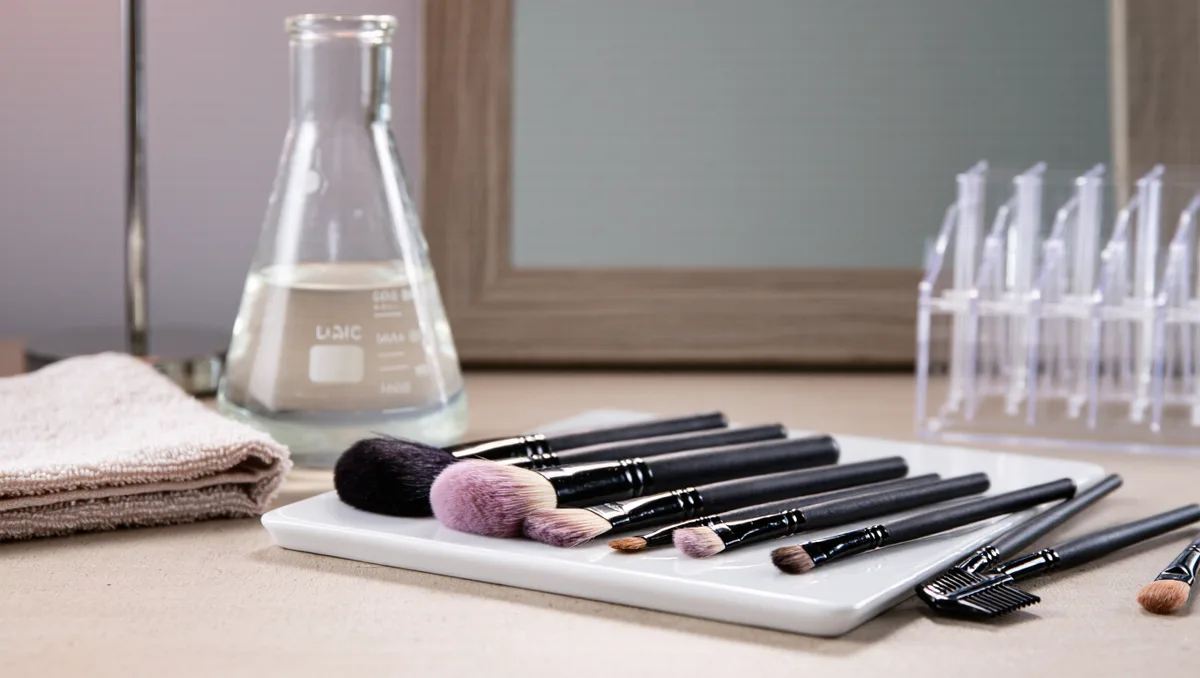
Flat drying wins. After cleaning, lay brushes flat with the bristles hanging off the edge of a counter and let them air-dry, which keeps the shape correct, with a rack and towel underneath to catch drips. Two habits cause damage. Drying brushes vertically with bristles up lets water leak into the ferrule, the piece that joins bristles to handle, and loosens the glue. Heat from a blow dryer causes brushes to lose shape and can start bristles falling out, per the same Allure interview.
Why does brush hygiene matter for skin?
The 2020 study behind the numbers above tested five categories of used cosmetic products and found bacterial contamination in 79 to 90 percent of them, including Staphylococcus aureus and Escherichia coli. Beauty blenders carried especially high loads, and 64 percent of the collected blenders had been dropped on the floor and kept in use. The authors concluded that significant contamination builds up during normal use and called for greater user awareness. Bristles and sponges are porous, so they hold onto oils, debris, and bacteria, as one makeup artist told Allure.
Conclusion: a small habit with a clear payoff
Cleaning makeup brushes and sponges comes down to a weekly wash, a gentle cleanser, and flat drying with the bristles off the counter edge. The glue rule and the no-heat rule protect the tools. The hygiene rule protects the skin those tools touch, which the contamination data make hard to ignore. Set a recurring day, keep the soap by the sink, and treat visible makeup on a bristle as the signal that the wash is due.