Makeup for beginners works best as a five-step routine: moisturizer, base, concealer, color, and a finishing touch. That is the whole structure, and it takes about ten minutes once you have done it a handful of times. The U.S. Food and Drug Administration, which regulates cosmetics sold in the United States, reminds consumers that makeup is applied to skin first and foremost, so the routine starts before any pigment touches your face (FDA, 2026).
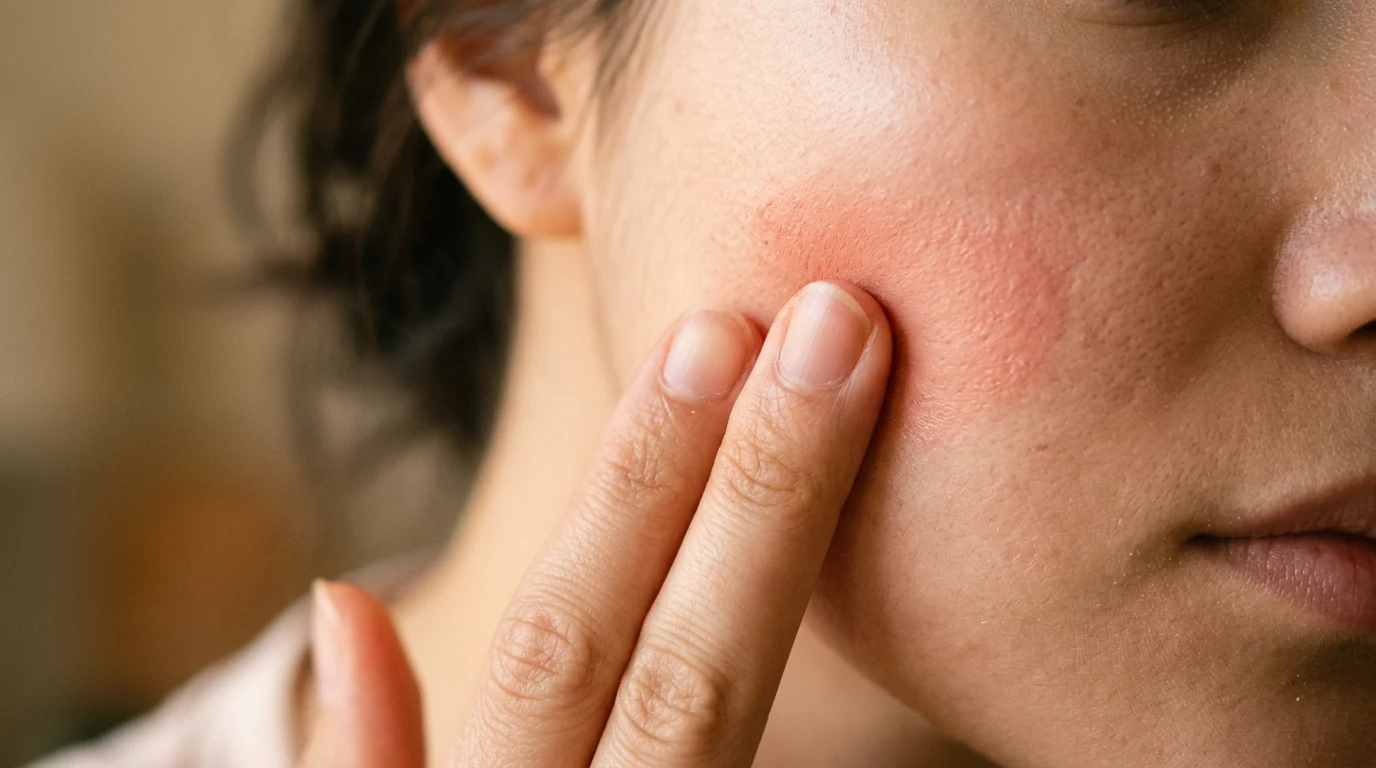
If your skin stings, breaks out, or reacts to a product, stop using it and speak with a healthcare professional. With that said, here is the routine, step by step.
What do you actually need to buy first?
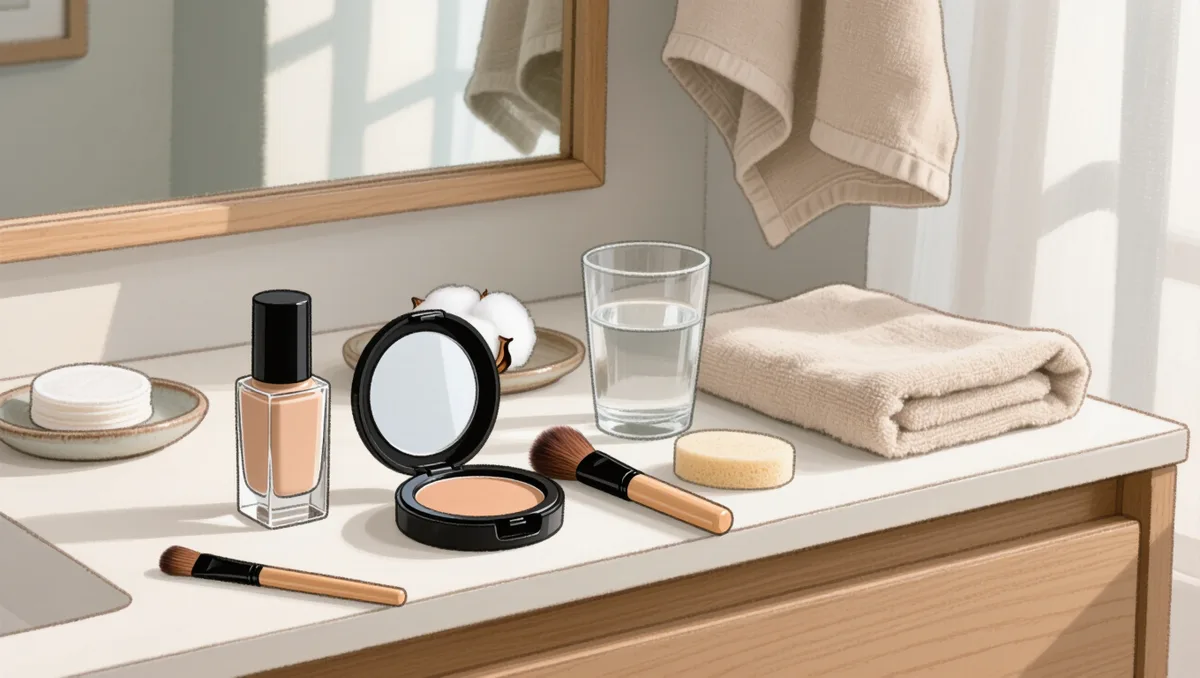
Five products cover the routine: a moisturizer, a base product (tinted moisturizer or light foundation), a concealer close to your skin tone, one cream blush, and a mascara. Add a lip balm or a tinted balm and you are done. Drugstore versions of all five cost roughly the same as one prestige item, so a full starter kit does not require a big budget. Skip primers, palettes, contour kits, and setting sprays until the five basics feel boring. Boring is the goal: you should not have to think about the routine, only about the small adjustments.
Step 1: Moisturizer (1 minute)
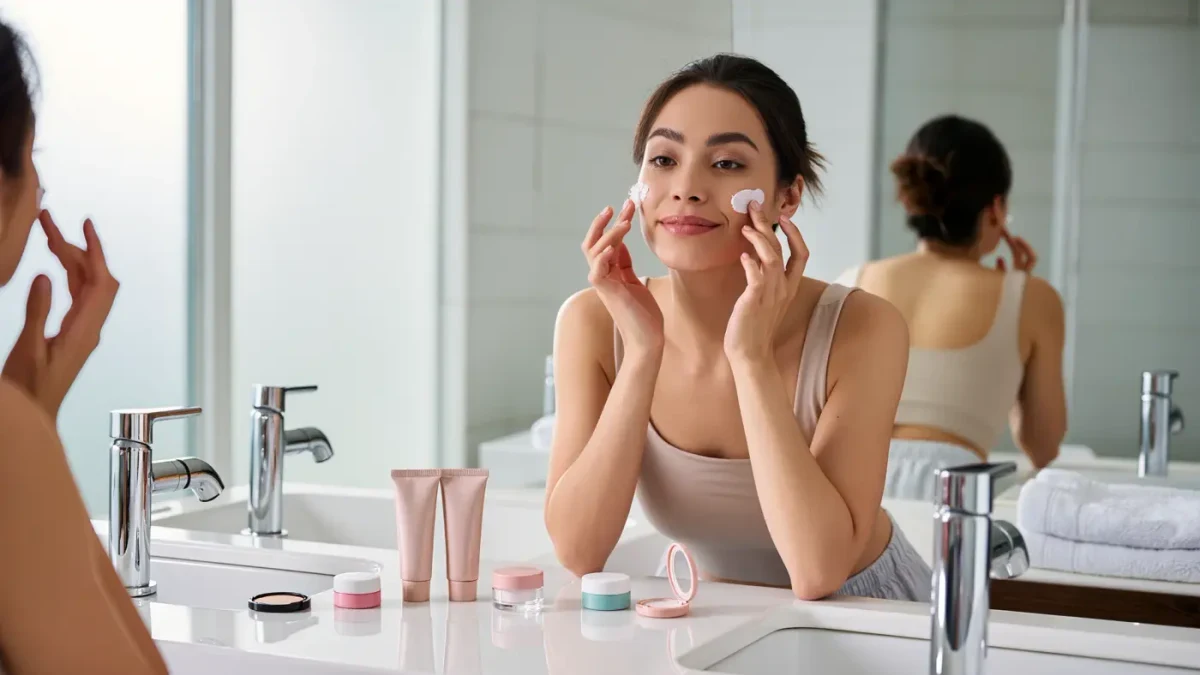
Apply a coin-sized amount of moisturizer to clean, damp skin. This step matters because makeup clings to dry patches and sits unevenly on dehydrated skin. Wait about a minute while it absorbs, or spend that minute doing your hair. If your skin is oily, choose a lightweight lotion instead of a rich cream; if it is dry, the richer texture is worth it.
Step 2: Base (2 minutes)
Dot tinted moisturizer or light foundation on your forehead, cheeks, nose, and chin, then blend with your fingers or a damp sponge. Work from the center of your face outward and stop when the color meets your jawline evenly. Fingers are a completely legitimate tool at this stage — they warm the product and press it into the skin. Aim for coverage where you want it, not everywhere by default. If your skin is clear, a sheer base may be all you ever need.
Step 3: Concealer (1 minute)
Use a small brush or your fingertip to place concealer only where the base did not finish the job: usually under the eyes, around the nostrils, and on any blemish. Blend the edges with a light tapping motion rather than rubbing. A concealer one shade lighter than your base brightens under the eyes; a concealer matched exactly to the spot works better on blemishes. Two shades is not a requirement, just a refinement you can add later.
Step 4: Color (3 minutes)
Smile, place cream blush on the fullest part of your cheek, and blend up toward the temple. Do the same small amount on both sides, checking in natural light if you can. Then one or two coats of mascara: wiggle the wand at the base of the lashes and pull through to the tips. Cream blush is the most forgiving beginner product because it stays movable long enough for you to fix placement, while powder sets immediately.
Step 5: Lips and a check (2 minutes)
Finish with balm or tinted balm. Press your lips together, look in the mirror from arm's length, and check for two things: blending lines along the jaw and uneven color on the cheeks. Fix those, and you are finished. The whole routine should land around ten minutes, and with repetition it drops to seven or eight.
How long until it feels automatic?
Most people need two to three weeks of daily repetition before the sequence stops requiring concentration. Practice once on a weekend when you are not going anywhere; a low-stakes practice run teaches you more than a tutorial you watch at double speed. Keep the five products lined up in the order you use them for the first couple of weeks. Physical order in front of the mirror becomes mental order surprisingly fast.
Which mistakes are worth avoiding early?
- Buying a full kit before mastering five products. Unused makeup expires; the FDA advises checking period-after-opening symbols and replacing products on schedule.
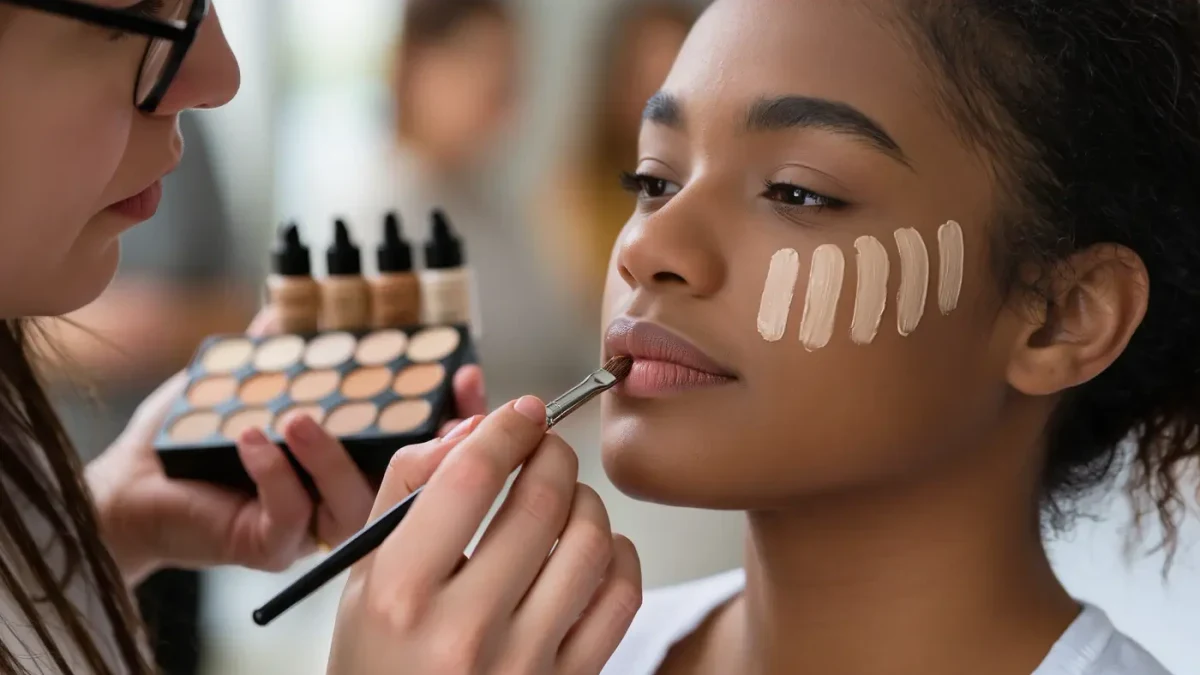
- Matching base by testing on your hand. Test on your jawline in daylight instead, where the product meets your neck.
- Applying full coverage on day one. Sheer products hide beginner blending errors better than thick ones.
- Sleeping in makeup. Removing it takes two minutes and protects your skin barrier overnight.
When should you add a sixth product?
Add one new product at a time, and only when a specific want pulls you toward it: brow gel when your brows bother you, eyeliner when you want definition, powder when your base wears off by midday. Layering additions onto a stable routine tells you exactly what each new product does. Adding three at once tells you nothing except that something changed.
A routine you can do on a bad morning beats an impressive one you can only manage on a good day.
FAQ
Do I need a primer as a beginner?
No. Moisturizer does most of the smoothing work a primer would do at this stage. Try a primer after a month or two if your base separates or fades early; then you will know exactly what problem it is solving.
Should I use brushes or my fingers?
Either. Fingers work well for cream products and thin bases; a sponge or brush gives a more even finish for fuller formulas. Start with fingers and one inexpensive sponge, then add a brush only for a product that resists your hands.
How do I choose a foundation shade?
Test swatches on your jawline in natural light and pick the one that disappears. If you sit between two shades, the neutral one usually wins. Full guidance deserves its own article, and we have one linked below.
How long does makeup last once opened?
Most products carry a period-after-opening symbol showing months of safe use, commonly 6 to 24. Mascara is the shortest at roughly three months. The FDA advises discarding products that change smell, color, or texture.