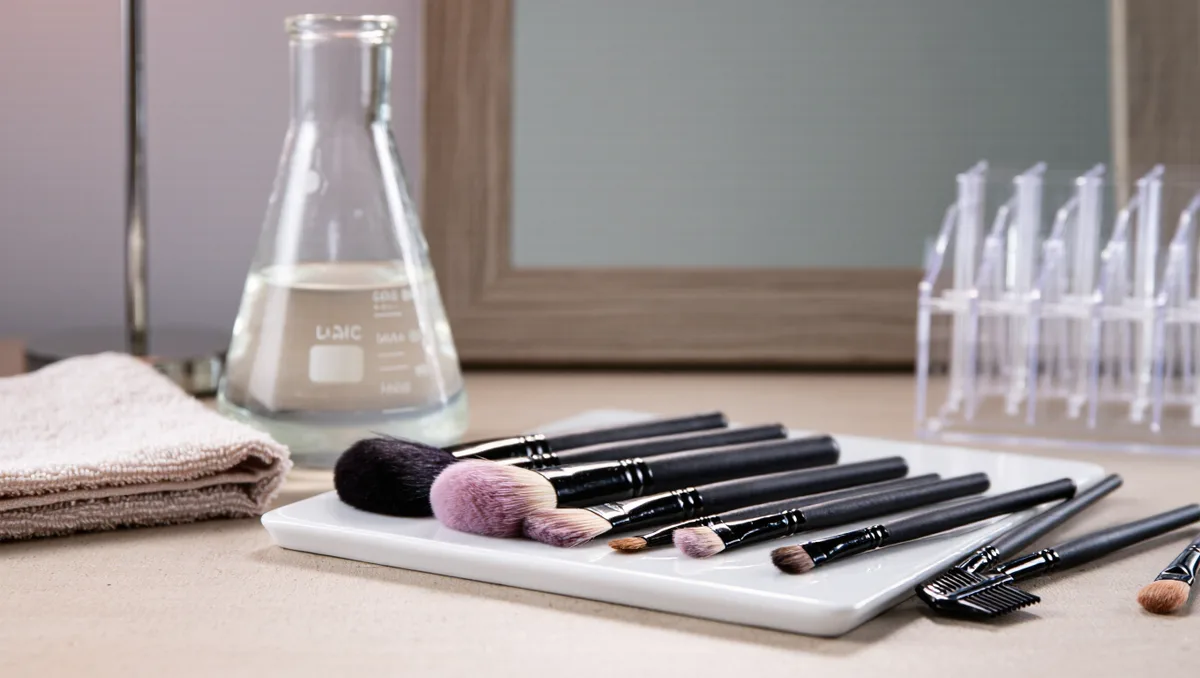
The makeup brushes you actually need number five: a foundation brush or sponge, a powder brush, a blush or angled cheek brush, a flat eyeshadow shader, and a fluffy blending brush. That is the complete kit behind most professional-looking results, because product quality and technique matter more than brush count. Brands sell sets of fifteen or more pieces, yet each additional brush mostly repeats a job one of the five already does (FDA, 2026).
One practical note before the list: brushes are tools that touch skin daily, and the FDA advises keeping cosmetics tools clean and discarding anything that causes irritation. Cleaning guidance follows at the end.
Which five brushes make up the kit?
- Foundation brush or damp sponge. A flat-top kabuki or a dense buffing brush presses liquid base into the skin without absorbing half the product. A damp latex-free sponge achieves the same compact finish. Choose one format; owning both is redundancy. Expect two to five minutes of use per day, the highest workload in the kit.
- Powder brush. Large, fluffy, dome-shaped. Its job is controlled diffusion: picking up a small amount of powder and distributing it so thinly that no one sees it, only its effect. The bigger and softer the brush, the harder it is to over-powder.
- Angled cheek brush. A medium fluffy brush with a slanted edge follows the cheekbone for blush and bronzer in one placement. The angle does the guiding, which is why this brush serves two products well. It can also run highlighter down the top of the cheekbone.
- Flat shader brush. The eye workhorse: packs color onto the lid, presses concealer into place, and drawn sideways lays down a soft liner along the lash line. Its flat edge, not its fuzz, does the precision work.
- Fluffy blending brush. A loose, tapered brush whose only job is erasing edges. It is the difference between eyeshadow that looks applied and eyeshadow that looks like shadow. If you buy eye brushes one at a time, this is the first.
What does each natural and synthetic fiber type do?
Synthetic bristles are non-porous, so they absorb little liquid product, which makes them the default for foundation, concealer, and cream blush. Natural hair holds powder differently and picks up a fine, even veil, which suits powder work, though modern synthetics now handle powders nearly as well. The practical takeaway: buy synthetic for anything wet and let the rest follow preference. Every brush, whatever the fiber, should feel soft against your cheek with no scratch of coarse strands. makeup coverage.
Which brushes are not worth buying early?
- Contour brushes. An angled cheek brush does soft contouring, and harsh contouring needs correction more than it needs a specialty tool.
- Brow and lash combs, spoolies from old mascara work the same job at zero cost.
- Lip brushes. A lip liner plus direct application covers nearly every situation; a brush helps mainly with dark, unforgiving shades.
- Fan brushes. Pretty for highlighter, redundant when an angled cheek brush is already in the kit.
- Corrector and concealer brushes in multiple sizes. Fingers and one flat shader handle most concealer work.
How much should a minimal kit cost?
Reliable versions of all five brushes are available in the mid-range tier, roughly fifteen to twenty-five dollars each, and the eye brushes at the lower end of that. The expensive end buys handle finishing and hair softness, not better results you can see from arm's length. A useful budget split: spend on the foundation tool and the blending brush, save on the powder brush, since softness is the only variable that matters there and it is cheap to obtain.
How do you wash and care for them?
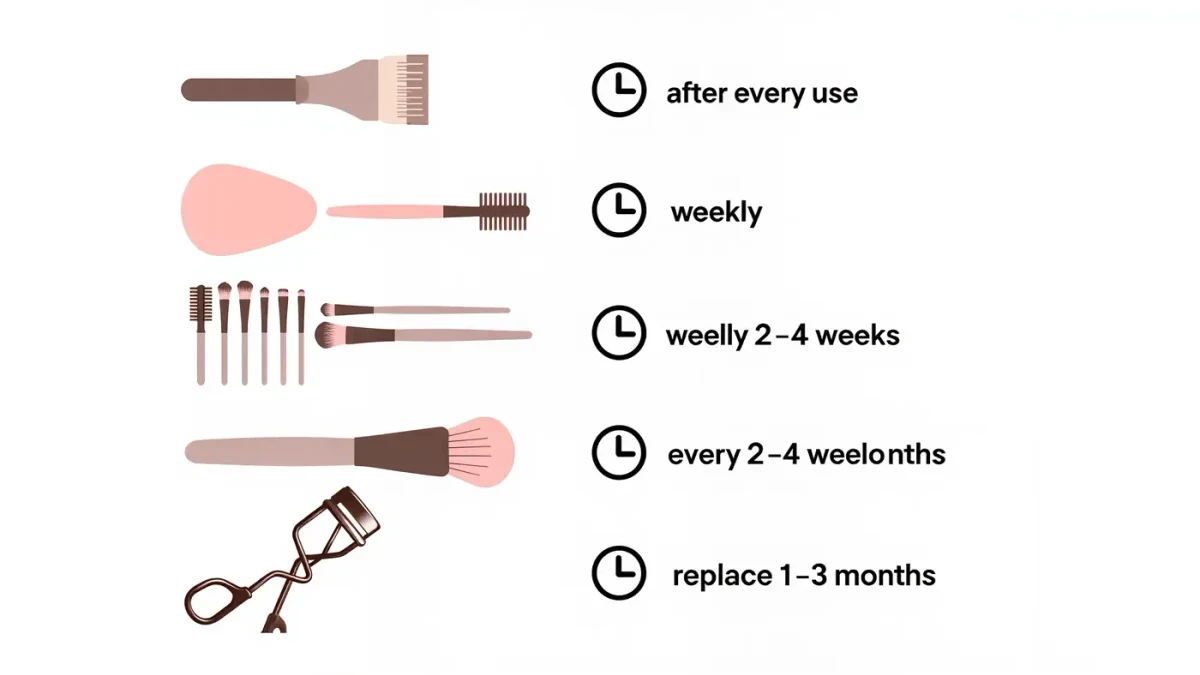
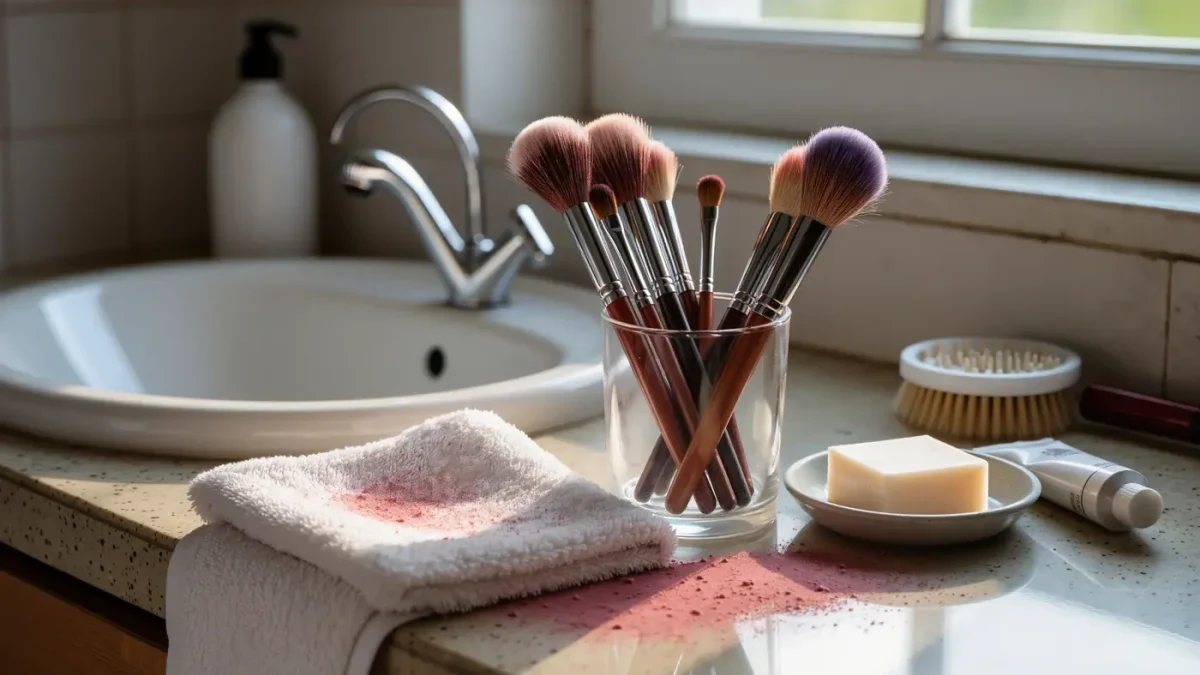
Wash weekly with lukewarm water and a drop of gentle soap or brush cleanser: swirl the head, work the lather down to the ferrule, rinse until the water runs clear, and never soak brushes upright with heads down, because water seeping into the handle loosens the glue. Dry flat over a counter edge so air circulates around the head. Eye brushes that touch cream products need washing more often than powder-only brushes. The FDA's consumer guidance on cosmetics stresses hygiene around any product used near the eye, which is the strongest reason to keep the shader and blender on a short wash cycle (FDA, 2026).
When should you replace a brush?
When shedding becomes constant, when bristles lose their shape and no longer return after washing, or when a smell lingers after cleaning. There is no fixed expiry, but a foundation tool in daily use typically shows wear within one to two years. Replacement matters more than it sounds: a shedding brush leaves bristles trapped in drying base, and a misshapen blender streaks more than it smooths.
| Brush | Primary job | Also handles |
|---|---|---|
| Foundation brush or sponge | Even base application | Cream contour, pressing concealer |
| Powder brush | Diffused powder setting | Soft bronzer wash |
| Angled cheek brush | Blush placement | Bronzer, highlighter, soft contour |
| Flat shader | Color on the lid | Concealer, soft lash-line liner |
| Fluffy blender | Erasing edges | Soft crease work, fallout cleanup |
FAQ
Can I just use my fingers?
For cream blush, liquid base, and concealer, fingers do respectable work and cost nothing. The kit earns its place where diffusion matters: powder, eyeshadow blending, and large-area bronzer. A hybrid of fingers and three brushes is a legitimate permanent setup.
Do expensive brushes last longer?
Often, yes: better ferrules and glues survive washing cycles longer. But lifespan depends mostly on care, so a mid-range brush washed and dried correctly usually outlives a neglected expensive one. Buy mid-range first, upgrade only a brush you use daily.
How often should I wash makeup brushes?
Weekly for brushes that touch liquid or cream products, every two weeks for powder-only brushes. Skin that breaks out easily deserves the shorter cycle, since bristles carry oil and old product back to the face.
Is a brush better than a sponge for foundation?
Different finishes, no winner. A sponge presses base flatter and more skin-like; a brush buffs it slightly fuller and wastes less product. Many people keep exactly one of each and choose by how the skin feels that day.