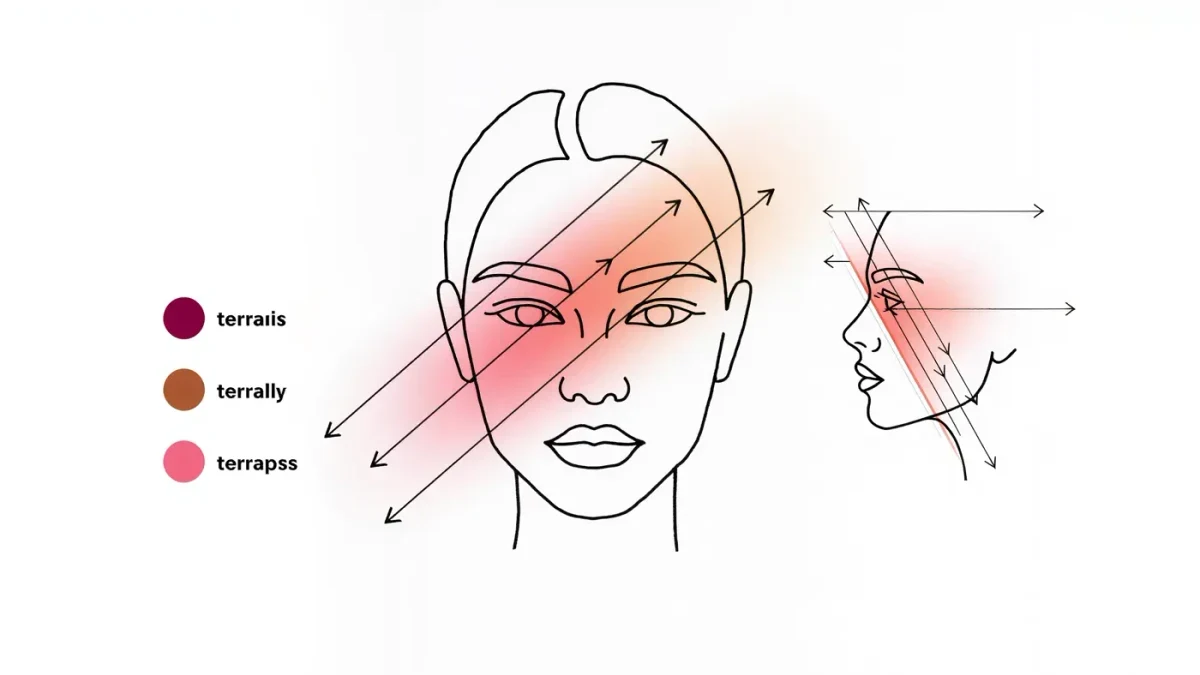
To apply blush, place it on the apples of your cheeks for a fresh look, sweep it along the cheekbones toward the temples for a lifted look, or blend it higher toward the eyes for a sunlit look. Placement is the variable that matters most, more than shade, more than formula. Blush is a color cosmetic, one of the product categories the FDA regulates for safety, and like every color product its effect depends on context: a few centimeters of placement shift can read as a different face entirely (FDA, 2026).
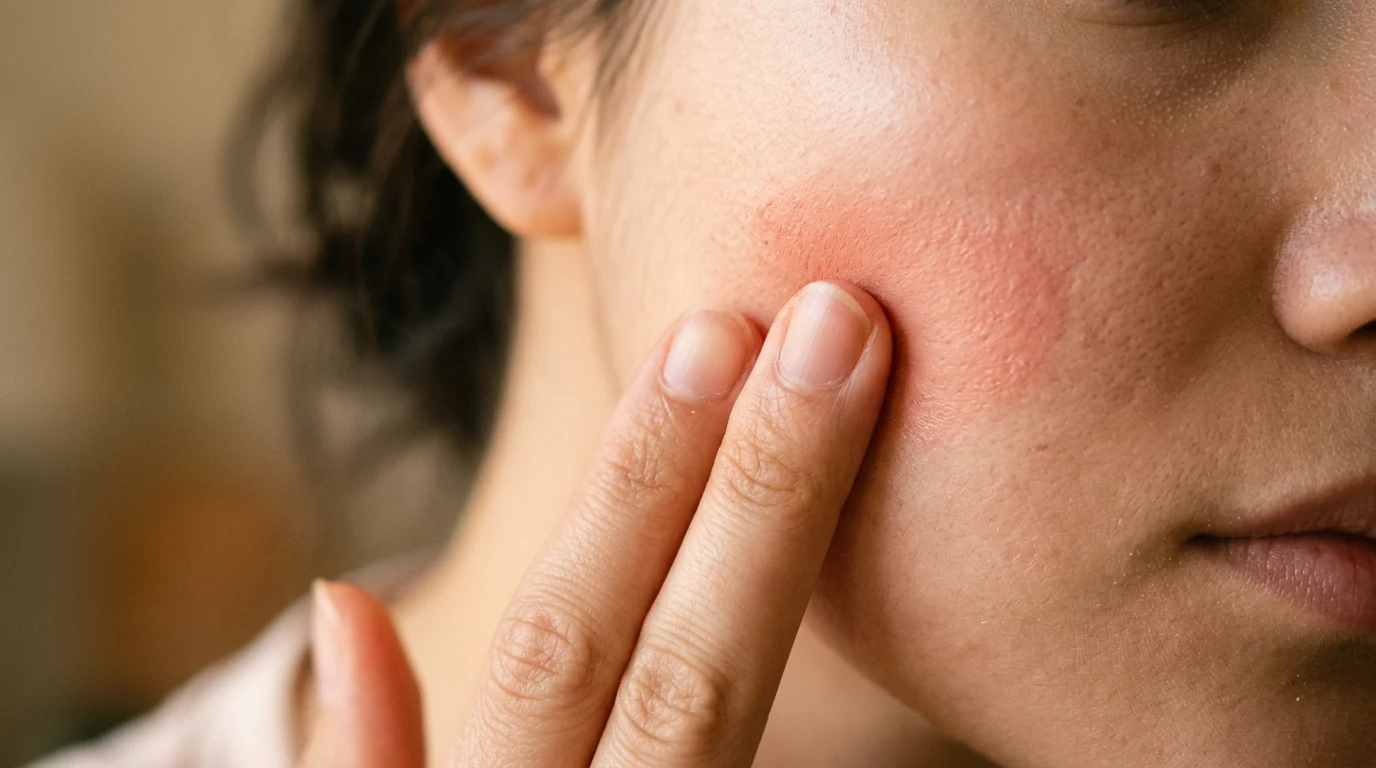
If blush application irritates your skin, pause the product and consider whether a fragrance or dye in the formula is the cause.
Why does placement matter more than color?
Your eye reads where color sits before it processes what the color is. Blush low on the face pulls attention down; blush along the top of the cheekbone lifts it. Blush placed wide makes a face read broader; blush kept close to the nose with warm tones makes it read healthier, the way skin looks after a walk. The same pan of product can do three different jobs. This is also why a blush that looks striking in one person's photo can look wrong on you: the placement, not the pigment, was the difference.
Where are the three main placement zones?
- Apples of the cheeks. Smile, and place the blush on the roundest part that rises. Blend slightly upward and back. This placement sits lowest and reads the most youthful and fresh. It suits round and square faces well because it softens strong jaw geometry.
- Along the cheekbones. Do not smile. Find the bone by feeling from your ear toward the corner of your mouth, and sweep blush just above it toward the temple. This placement lifts and suits longer and angular faces, and it doubles as soft sculpting.
- High, toward the eyes. Blend blush from the upper cheek up toward the outer corner of the eye, even touching the lower lid area with the same color. This placement reads sunlit and modern, and it ties cheeks and eyes into one look.
How much blush should you actually use?
Start with less than feels sufficient: one tap of cream on each cheek or one tap of a powder brush. Build in thin layers while checking from arm's length in daylight, because blush is the easiest product to overdo and the hardest to remove without disturbing your base. A useful rule: if the first thing you notice in the mirror is the blush, it is one layer too much. Two thin layers beat one thick one every time.
Which shade suits your skin tone?
The simplest reliable guide is your own coloring under exertion or cold: the flush your skin naturally produces is the family your blush should sit in. Fair skin suits soft pink and light peach; medium and olive skin suit rose, apricot, and berry; deep skin suits rich berry, brick, terracotta, and vivid fuchsia, which look far more natural on deep tones than pale pink. When unsure between two shades, the slightly warmer one usually reads more like real flush.
Cream or powder blush?
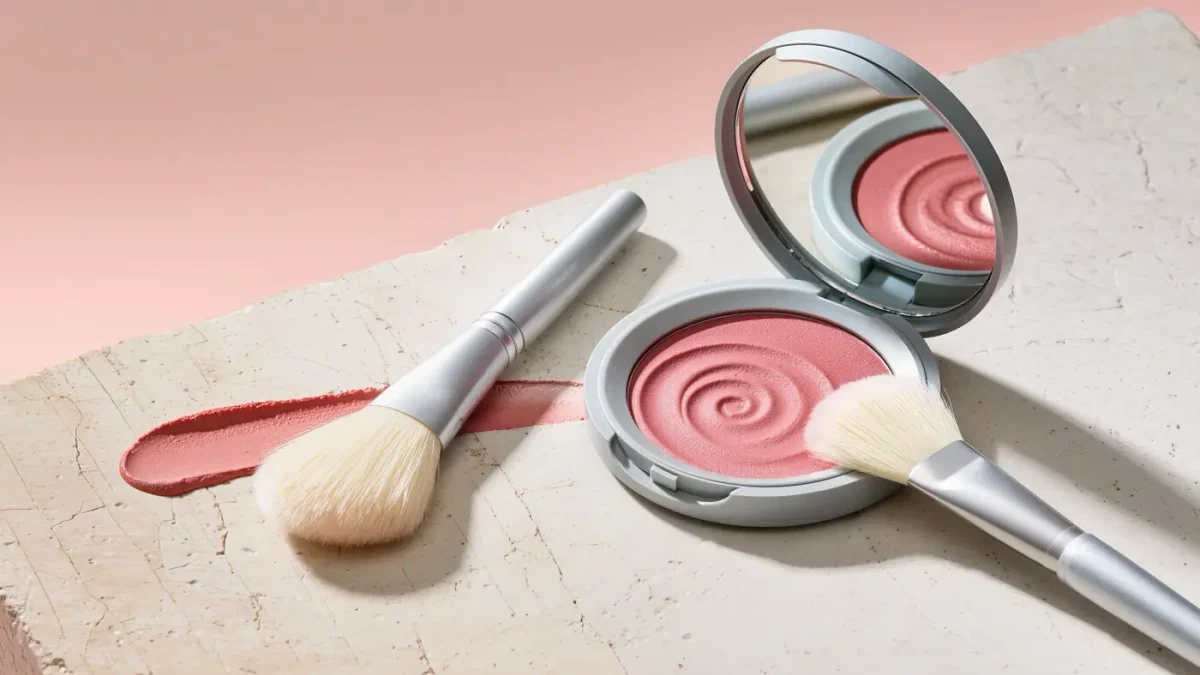
Cream blush goes over liquid or cream base and stays movable while you place it, which makes it forgiving for beginners. Powder blush goes over powder or at the end of the routine, sets immediately, and lasts longer on oily skin. The failure mode to avoid is mixing: powder over cream can patch, and cream pressed over powder can streak. Pick the formula that matches what is already on your face, or apply powder blush after your base has fully set.
| Goal | Placement | Best formula |
|---|---|---|
| Fresh, youthful | Apples of cheeks, blended slightly up | Cream |
| Lifted, sculpted | Along cheekbones toward temples | Powder or cream |
| Sunlit, modern | Upper cheek toward the eyes | Cream |
| All-day wear on oily skin | Any of the above | Powder, after base sets |
What tools work best?
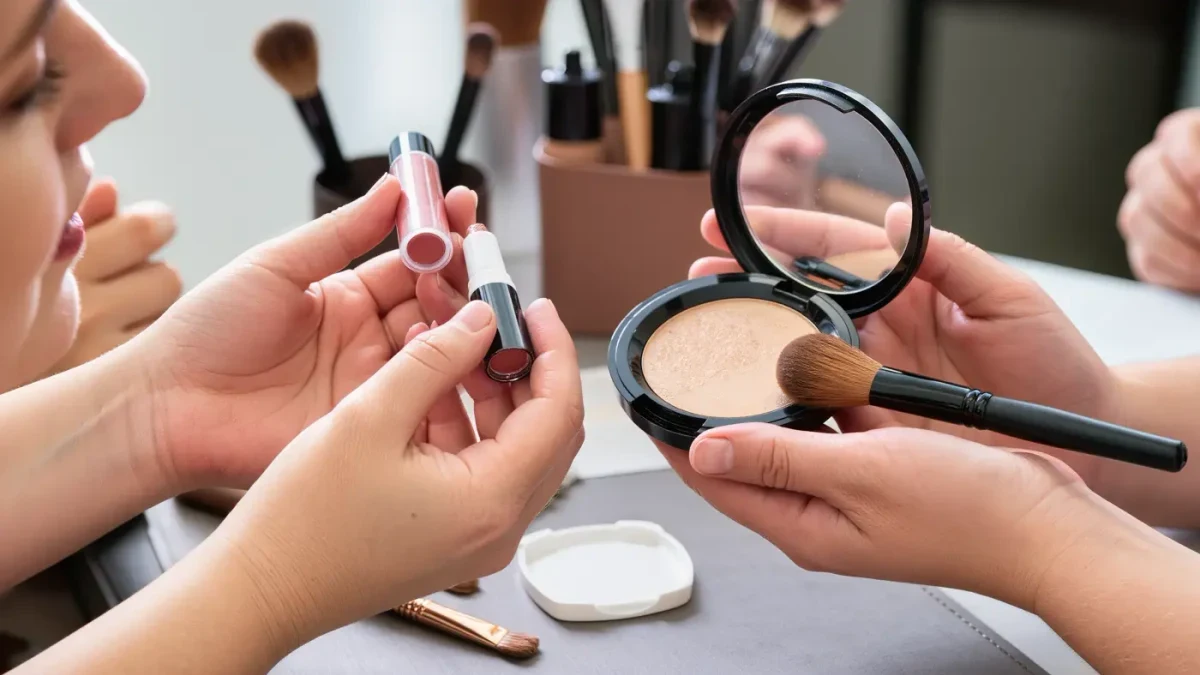
For cream, fingers work well: warmth melts the product into the base so there is no edge. A dense duo-fiber or stippling brush gives a more diffused result. For powder, a fluffy angled brush is the most useful single tool, because the angle follows the cheekbone naturally. Tap off excess powder before it touches your face; the brush should look like it holds almost nothing on the first tap.
When should you skip blush entirely?
If you are wearing a strong lip and a strong eye in the same look, a whisper of blush or none at all keeps the face balanced. Skip it on days when your skin is irritated or flaring; color pressed onto inflamed skin tends to emphasize the texture. And if your natural flush is already strong, a tiny amount high on the cheekbones finishes the face without adding more color where it already exists.
FAQ
Can I wear blush without foundation?
Yes, and it is one of the most natural-looking ways to wear makeup. A small amount of cream blush on bare, moisturized skin reads like a healthy flush. Blend the edges well so the color fades into the skin without a line.
Why does my blush disappear by noon?
Oily skin breaks down cream formulas, and rubbing from masks, phone screens, or face touching removes pigment. Set cream blush with a light press of powder on top, or switch to a powder formula, and apply it after your base has fully set.
Is blush before or after bronzer?
Most commonly after. Bronzer lays down warmth first, blush then sits on top as the focal color. If you prefer a subtle look, reverse it: blush first, bronzer lightly over it to blend both together.
How do I fix blush I applied too heavily?
Press a clean damp sponge over the area to lift excess product, or blur the edges with a clean brush and a small amount of your base or translucent powder. Work from the outside in so the remaining color concentrates where you wanted it.