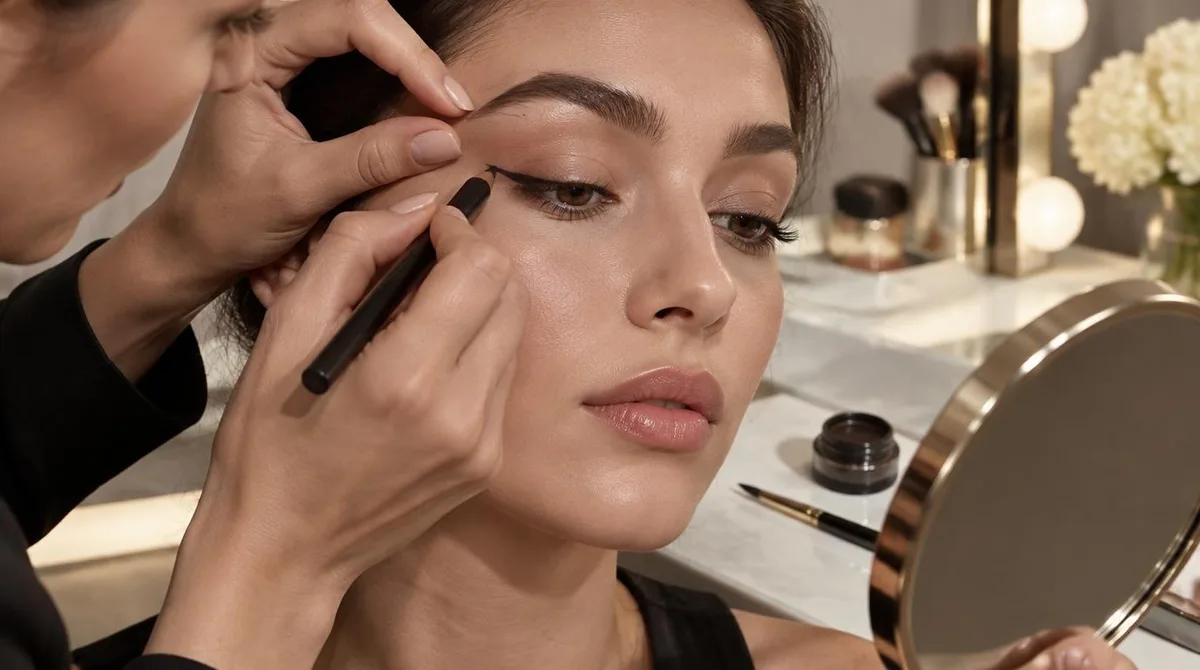
Eyeliner is a cosmetic made to define the eyes, and it goes on easiest in short strokes that stay close to the lashes. The formula sets the rules: pencils forgive, gels glide on with a brush, and liquids draw the sharpest line. Eye-area makeup is safe when used properly, but the FDA warns that misuse can let bacteria grow, so clean tools count as part of the technique.
The placements, formulas, and effects below come from the encyclopedia entry on eyeliner and the FDA's published safety page. We covered a connected angle in How to Remove Makeup Properly in Two Passes.
Which formula should a beginner pick?
Each form does a different job, so the choice is about the look and the control wanted:
- Pencil: wax-based pencils are softer, and their waxes ease application, which makes them a low-pressure place to learn the stroke.
- Gel: a softer gel liner that applies with an eyeliner brush; it goes on with precision while staying gentler in look than powder formats.
- Liquid: an opaque formula in a small bottle, applied with a sharp-tipped brush; it makes a clean, precise line and suits sharp wings, though the heavier look often keeps it to the upper lash line.
- Felt tip: liquid in a marker pen, with a tip sized for control and no sharpening.
The encyclopedia entry counts six main types; kohl, cake, and shimmer formats fill out the rest. Formula matters more than color while the skill is new.
How do you draw the line, step by step?
- 1. Start with a clean face and clean tools. The FDA's rule of thumb is that eye cosmetics are usually safe when bought, but misuse lets bacteria or fungi grow in them.
- 2. Choose where the line lives: above the upper lashes, below the lower ones, both, or on the waterline. The entry lists all of these placements.
- 3. Draw in short strokes. The application advice on record favors small marks over one long pull; short strokes keep the line even.
- 4. Take the wing slowly. A winged line defines the top lid and extends to a point about halfway toward the end of the eyebrow, so mark that point before filling toward it.
- 5. Keep the pressure light. The FDA asks wearers to be careful not to scratch the eyeball or the delicate skin around it during application or removal.
- 6. Close everything tightly when finished, and keep the containers clean and free of dust.
When does gel liner earn its spot?
Tight lining is the classic case. The technique sets liner tight against the waterline under the upper lashes, so lashes look like they start farther back on the lid and read as longer. Waterproof liner is preferred there because of the moisture, and the entry notes that gel liner with a small, angled brush or a waterproof pencil both do the job. Try it once the basic upper line feels steady.
What does the FDA say about safe use?
- Never share eye cosmetics, and treat store testers with distance: sample only with single-use applicators such as clean cotton swabs.
- Never apply or remove eye makeup in a moving vehicle. A sudden stop can drive an applicator into the eye, and even a slight scratch can lead to a serious infection.
- Use products near the eyes only when they are made for that use; a lip liner is not an eye liner.
- Check the ingredient declaration, which the Fair Packaging and Labeling Act requires on the label, when comparing brands.
- Some color additives approved for cosmetics in general are not approved near the eye, and the FDA names kohl, also sold as kajal or surma, as one of particular concern.
How long should an eye product stay in the bag?
Shorter than the rest of the kit. Manufacturers usually recommend discarding mascara two to four months after purchase, per the FDA's safety page, and dried-up mascara goes straight out. Adding water or saliva to stretch a product is off the table; moisture lets microbes multiply. Heat shortens preservative life, which is why a hot car is a poor storage plan. When a product changes smell, texture, or color, the calm move is a replacement.
Conclusion: short strokes, clean tools, one formula at a time
Eyeliner rewards patience over speed. Pick the formula that matches the look, place the line where the placements above describe, and build the shape in short strokes. Keep every tool clean, follow the FDA's eye-area rules, and replace products on schedule. The line grows steadier with every practice round. For related coverage, see How to Apply Blush: Where to Place It and Why Placement Changes Everything.