Hyaluronic acid works when you apply it to damp skin and seal it with a moisturizer. Applied to dry skin in dry air and left uncovered, it has little water to draw on, so it can sit on the surface doing less than the label promises. The order matters more than the price of the bottle.
A skincare ingredient this popular deserves a plain explanation. Hyaluronic acid is a sugar-based molecule your body already makes, found naturally in skin, eyes, and joints, and its main job is holding moisture. According to the Cleveland Clinic, a quarter-teaspoon of hyaluronic acid can hold about one and a half gallons of water, which is why it shows up in so many moisturizing products.
That water-holding trick is also the catch. A humectant like this one needs water available to grab, either from the air or from the layers of your skin. This guide covers what the evidence supports, how to layer it, and where the marketing language outruns the science.
What is hyaluronic acid, exactly?
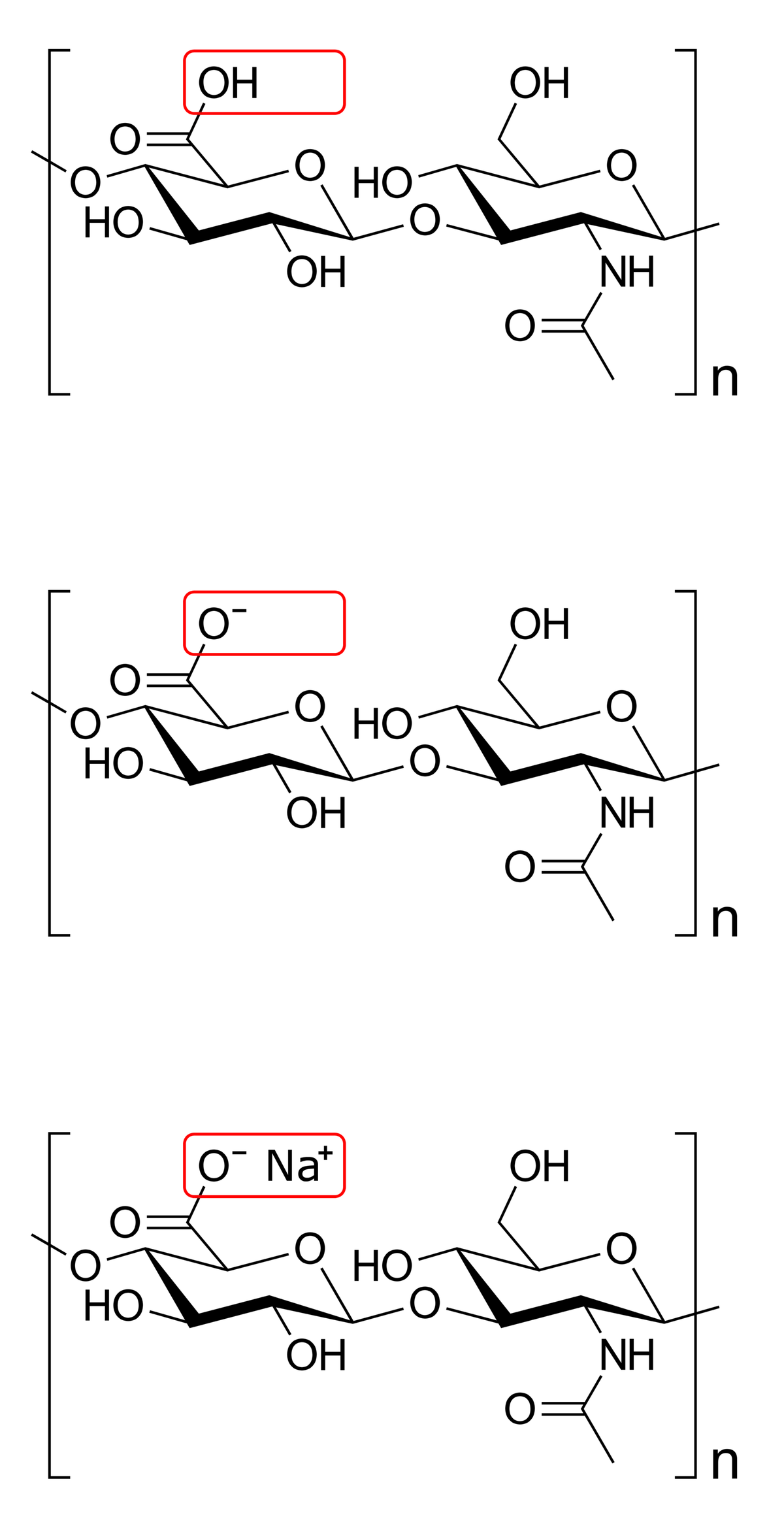
Hyaluronic acid, sometimes listed as sodium hyaluronate or hyaluronan, is a long chain-like molecule called a polymer. The chain has many spots where water can latch on. Because of that structure, it acts like a sponge in a gel, which is also why it is used medically in eye drops, joint injections, and dermal fillers, where it combines with water and swells to form a gel.
Your body carries a surprising amount of it. Per Wikipedia's summary of the research literature, an average 70 kg person has roughly 15 grams of hyaluronan in the body, with about one third of that degraded and rebuilt every day. More than half of the body's total supply sits in the skin, where levels fall with age and UV exposure, which is part of why topical versions became so popular.
On a label, the INCI name is usually "sodium hyaluronate," the salt form of the same molecule. Some formulas list several forms at different molecular weights. Makers of multi-weight serums say the smaller versions sit deeper in the skin's surface layers while larger ones stay near the top, and reviewers at Good Housekeeping tested several such blends and reported a noticeable plumping effect from a three-weight formula. That is a brand and tester claim, not a settled finding, but it explains why the ingredient lists get long.
What does it actually do for skin?
The well-supported job is hydration. Hyaluronic acid increases skin moisture, which makes skin look plumper and feel softer, and a 2023 review found it can help improve skin elasticity and roughness, according to Medical News Today. The same roundup cites a 2023 study of 129 participants in which oral hyaluronic acid improved skin hydration after 2 to 8 weeks and increased epidermal thickness after 12 weeks.
There is also early wound-care evidence. A 2025 study of 170 people found that daily use of a 0.2% hyaluronic acid gel improved wound healing rates and tissue formation. And a small 2025 study tested a hyaluronic acid gel on children with eczema, applied twice daily for 10 days, and saw improvements in redness and skin hydration. Those are medical-format studies, not proof that every serum on a shelf will do the same. This connects to our earlier piece, What Is Squalane? Lightweight Moisture for Almost Every Skin.
What the evidence does not strongly support: hyaluronic acid as an acne treatment. The Cleveland Clinic notes there has been limited research into hyaluronic acid combined with acne medications, and so far not much evidence that these combinations work. It is widely used in fillers that repair acne scars, but that is a procedure, not a serum effect.
How should you apply it?
The sequence is simple, and it takes about a minute.
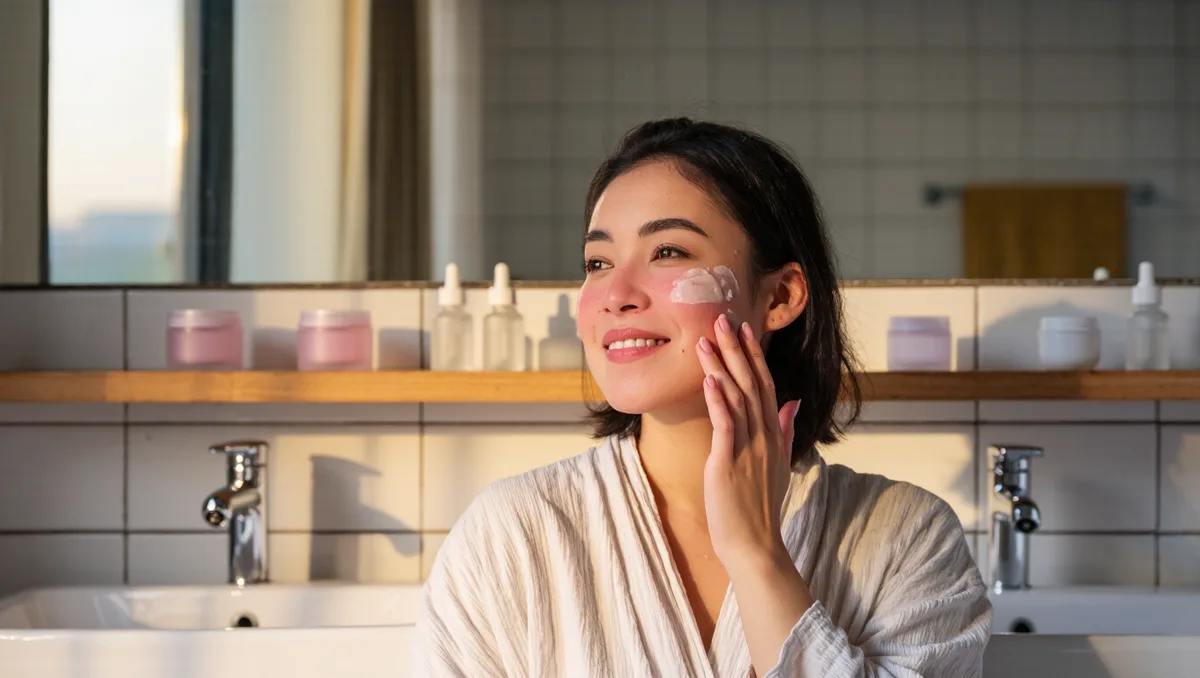
- Start with damp skin. After cleansing, pat skin so it is still slightly wet, or mist it. The molecule needs water to hold, and damp skin is the nearest supply.
- Apply the serum. A few drops, pressed in rather than rubbed hard. This takes about 20 seconds. Rushing to a dry face is the step most people skip past.
- Seal it. Follow with a moisturizer while the serum is still slightly tacky. A cream containing occlusives or barrier lipids, such as ceramides, keeps the drawn-in water from evaporating.
- Finish with sunscreen in the morning. Hydration steps do not replace sun protection.
Skip the dedicated serum entirely if your moisturizer already contains hyaluronic acid or another humectant such as glycerin. One well-formulated hydrating step is enough; two are not better. If your skin is very dry, a richer occlusive option like squalane layered on top can help hold water in without adding weight.
Does humidity really matter?
It matters more than most labels admit. A humectant pulls water from wherever water is easiest to get. In humid air, that is the atmosphere, and the ingredient performs at its best. In dry air, such as winter heating or a long flight, the easiest water source may be the deeper layers of your own skin, which is the opposite of what you want.
Our analysis: this is why the same serum can feel transformative in July and useless in January. The fix is not a new bottle. It is applying to damp skin and always covering with a moisturizer, so the water the humectant grabs stays put. In very dry conditions, a heavier cream is doing more work than the serum itself.
This is also why low-percentage humectant blends make sense. If you want a second water-grabber in the same routine, urea at low percentages behaves as a humectant too, and it is worth reading how urea changes jobs at higher percentages before combining. Readers following this should also see What Urea Does in Skincare: Humectant at Low Percentages, Keratolytic at High.
Is it safe, and what are the common mistakes?
Topical hyaluronic acid is considered safe. The Cleveland Clinic states that over-the-counter serums, creams, and lotions applied to skin are considered safe, and side effects are rarely reported, likely because the body produces the substance naturally. Injections are a different category entirely and should only be given by a licensed, qualified medical professional.
The mistakes are predictable:
- Applying to bone-dry skin. No water available, little to hold.
- Skipping the moisturizer. An unsealed humectant can lose the water it found.
- Expecting medical results from a cosmetic. Serums are cosmetics. They hydrate; they do not treat disease.
- Believing the buzzwords. "Plumping" describes a temporary water effect. Any claim that a serum rebuilds skin structure is doing more work than the evidence shows.
If you are patch-testing a new formula, keep a dated note of what you applied and how your skin responded. And if a product stings or reddens your skin, stop using it rather than pushing through.
What this means for your routine
The evidence establishes that hyaluronic acid is a safe, effective hydrator when it is applied to damp skin and sealed in, and that its water-holding capacity, not any exotic mechanism, is the whole story. What remains unknown is how much the molecular-weight blends on retail shelves change results compared with a single form, since most of that support comes from brand-sponsored testing rather than independent trials.
So buy the inexpensive one. Apply it wet, cover it, and spend the difference on a moisturizer you will actually use every day.