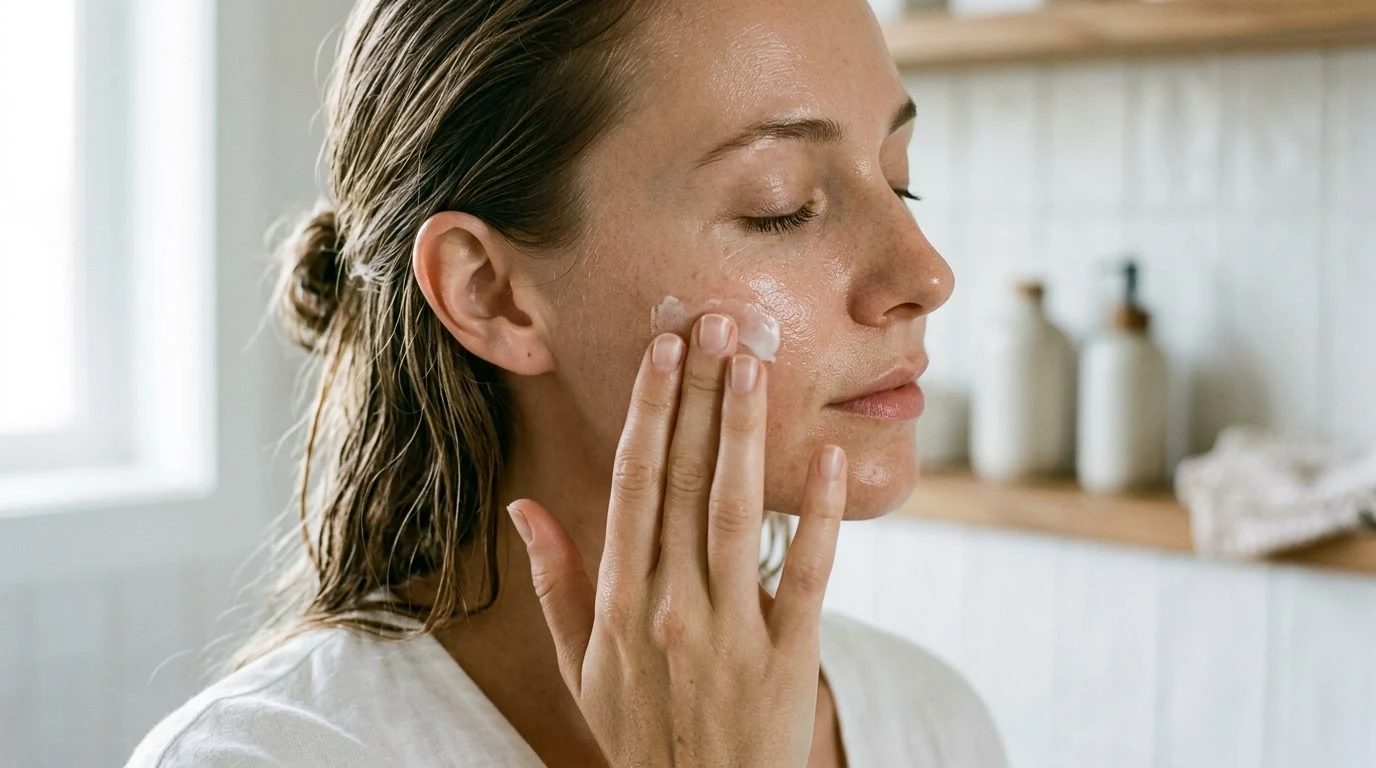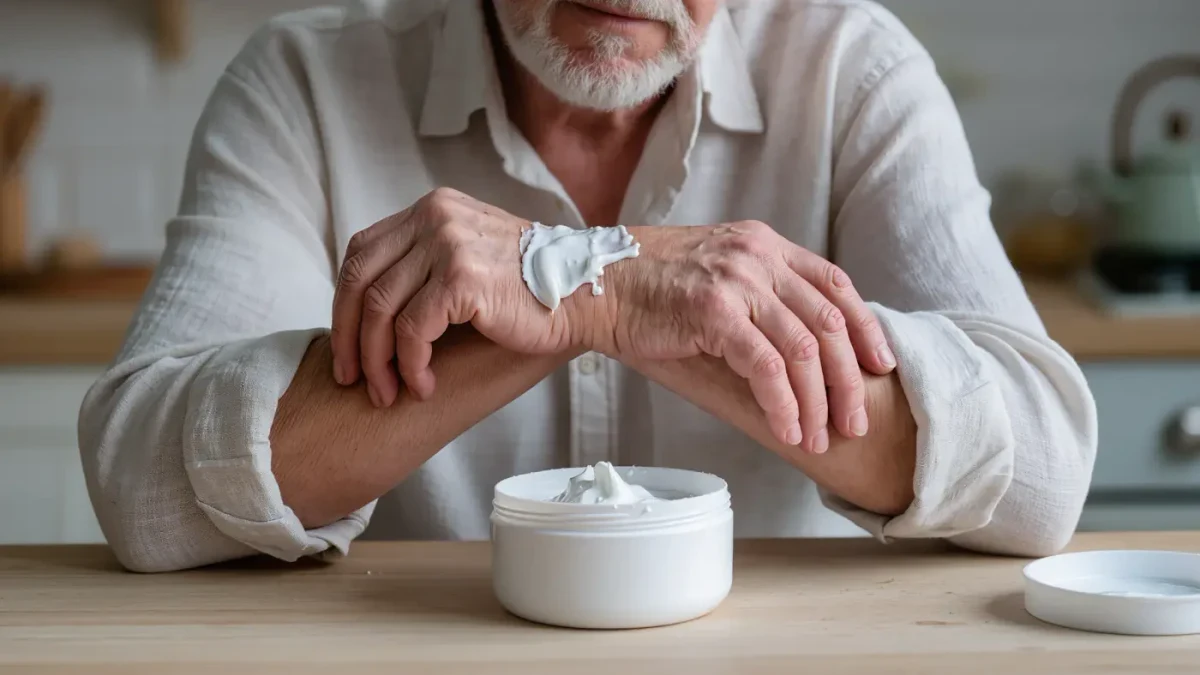
Urea in skincare is a two-mode ingredient: at low strengths it behaves as a humectant that holds water in the outer skin layer, and at strengths above roughly 10 percent it becomes a keratolytic that dissolves the protein cement of thick, rough skin, according to a 2021 review of urea in dermatology on the NIH's PMC database. Urea is not an additive your skin tolerates; it is a natural component of the skin's own hydration system, making up about 7 percent of the outer layer's natural moisturizing factor, the mixture of water-loving compounds that keeps healthy skin supple. That double identity explains why you will find urea in a gentle face cream at 5 percent and in a foot balm for cracked heels at 25 percent, doing recognizably different jobs.
Deeply cracked heels, thickened skin from a medical condition, or any wound needs a clinician rather than a stronger cream, and a two-day patch test on the inner forearm is worthwhile because higher-strength urea can sting compromised skin.
What is urea, and why is it already in your skin?
Urea is a small molecule your body produces when it breaks down protein, and the skin recycles it as part of its moisture machinery. The stratum corneum, the outermost layer, holds a blend of humectant compounds that reviews of skin chemistry call the natural moisturizing factor: amino acids, lactic acid, salts, and urea among them, drawing water in and keeping the surface flexible. Dry skin conditions are marked by depleted urea levels in this layer, and the PMC review notes that topical urea both replenishes that supply and supports the proteins and lipids that organize the barrier. This is why urea appears on ingredient lists under names like urea, carbamide, or as part of a moisturizing complex.
What does urea do at different strengths?
The strength decides the job, and the 2021 review lays out the tiers clearly.
| Strength in the product | Mode | Typical use |
|---|---|---|
| 2-10% | Humectant; binds water in the outer layer | Daily facial and body hydration, sensitive skin |
| 10-25% | Keratolytic; softens thick, rough areas | Body dryness, rough arms, legs, and scaly patches |
| 25-40% | Strong keratolytic | Cracked heels, very thick calluses, nail softening |
At low strength, urea acts like a refined humectant that also calms itching; the review describes antipruritic effects, meaning it reduces itch, which is why low-percentage urea creams are a staple for winter dryness. At higher strengths, urea breaks the hydrogen bonds holding dead cells together and softens the keratin protein itself, so hardened skin thins, softens, and stops splitting. The crossover zone is around 10 percent, and product labels in the European market, where urea creams are a pharmacy staple, print the percentage prominently for exactly this reason.
How do you start using a urea cream?
Match the strength to the body part, then keep the schedule boring.
- Pick the strength for the job, five minutes of label reading. Up to 10 percent for the face and daily body use; 10 to 25 percent for rough arms, shins, and elbows; 25 percent and above only for thick heel skin, not for the face.
- Apply to clean, slightly damp skin, about one minute. Damp skin gives the humectant fraction water to bind, a principle the AAD's moisturizer guidance applies to any hydrating ingredient.
- Use it twice daily on the affected area for two weeks. Clinical studies in the review show measurable barrier improvement within days to weeks of regular application.
- Reduce to maintenance once the skin is smooth. Rough areas that soften usually need only every-other-day application to stay that way.
Stinging on cracked or freshly shaved skin is the main side effect the review reports, and it fades as the skin repairs. Stop if burning persists.
Is urea good for the face?
Yes, at low strengths, and dermatology reviews give it a respectable place in facial care for exactly two groups: people with persistently tight, flaky skin that ordinary lotions do not fix, and people with sensitive skin who react to fragranced moisturizers, since a plain 5 percent urea cream is about as minimal as moisturizers get. Facial products keep the percentage at 5 to 10 percent and often pair urea with ceramides or glycerin. Avoid face products above 10 percent, and never use a heel balm on your face; the keratolytic strength that smooths calluses overwhelms facial skin.
How does urea compare to lactic acid and salicylic acid?
All three smooth rough skin, but from different angles. Lactic acid, an AHA, exfoliates and hydrates and is the better facial pick for texture. Salicylic acid, a BHA, works inside pores and suits breakout-prone areas. Urea is the least irritating of the three in the review's assessment, and it is the only one that is simultaneously a core component of the skin's own moisture system, which is why urea-based creams dominate the dry-skin, rather than the acne or anti-aging, aisle. For thick, cracked, or itchy body skin, urea is usually the first ingredient dermatology reviews reach for.