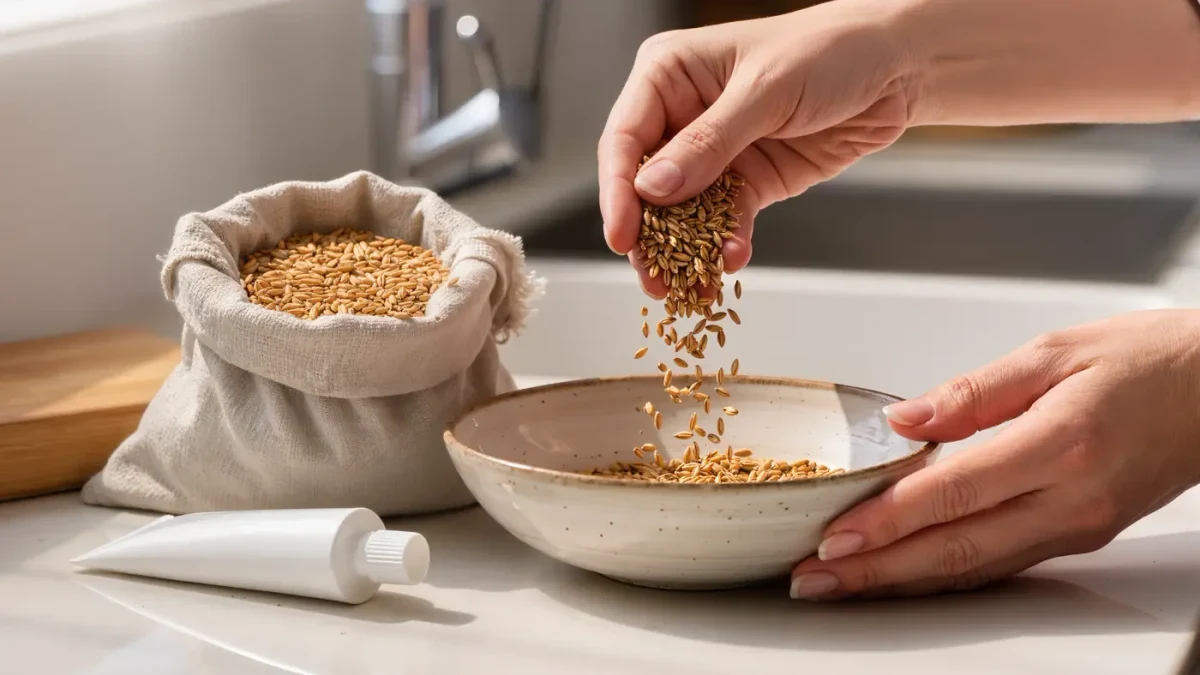
Azelaic acid is a dicarboxylic acid found naturally in grains such as wheat, rye, and barley, and topical versions are approved by the FDA at 15 and 20 percent for acne and rosacea, with cosmetic products sold up to 10 percent, according to the agency's approved drug labeling. For a beginner, that 10 percent over-the-counter strength, applied at night three times a week and sealed with moisturizer, is the entry point dermatology reviews describe as effective and unusually well tolerated. Azelaic acid is one of the few single ingredients that reads well on three common complaints at once: clogged pores, redness, and the dark marks blemishes leave behind, and reviews note it is considered safe to use during pregnancy, which makes it a frequent alternative when retinoids are off the table.
Rosacea and inflammatory acne are medical conditions, and a dermatologist should confirm the diagnosis and prescribe the 15 or 20 percent strengths where they are warranted; a two-day patch test on the inner forearm is a sensible first step with any new product.
What does azelaic acid actually do?
Three jobs, documented in dermatology reviews of the ingredient summarized on NCBI's PubChem database. It is keratolytic, meaning it helps loosen the material clogging pores, though more gently than salicylic acid. It is anti-inflammatory, calming the redness and swelling around blemishes and the flushing component of rosacea. And it interferes with tyrosinase, the enzyme skin cells use to make pigment, which is why studies summarized in reviews show it fading post-inflammatory hyperpigmentation at strengths of 10 percent and above. In laboratory studies it also inhibits the growth of the bacteria involved in acne, which reviews describe as a supporting rather than leading effect.
How is it different from other acids?
Weaker as an exfoliant, broader in its benefits, and gentler on the barrier. Glycolic acid renews the surface; salicylic acid digs into pores; azelaic acid does a little of both while adding the anti-inflammatory and pigment work neither matches. Reviews comparing topical acne agents place azelaic acid between salicylic acid and prescription retinoids in overall effect, with notably low irritation scores. The trade-off is speed: azelaic acid works slowly, and clinical trials of the 15 and 20 percent strengths run on twelve-week timelines, so the honest expectation for the 10 percent cosmetic strength is visible change over two to three months.
| Azelaic acid | Salicylic acid | Glycolic acid | |
|---|---|---|---|
| Main strength | Redness, marks, gentle unclogging | Oily, clogged pores | Texture, tone |
| Irritation potential | Low | Moderate | Moderate to high |
| Common strengths | 10% cosmetic; 15-20% prescription | 0.5-2% | 5-10% |
| Pregnancy | Reviews describe it as a preferred option | Consult a doctor | Consult a doctor |
How do you start using it?
The routine is short and the pace is deliberately slow.
- Cleanse and dry the skin, about one minute. Fully dry skin reduces the tingling the first applications bring.
- Apply a pea-sized amount to the whole affected area, twenty seconds. Not just on spots; azelaic acid works on the environment of the skin, so cover the cheeks, chin, or zones where breakouts and marks cluster.
- Three nights a week for the first two weeks. A short period of itching or tingling in the first minutes is common and settles; reviews note true irritation is uncommon at 10 percent.
- Moisturize on top, every time. The base of most azelaic products is a light cream, and a moisturizer over it stops the mild dryness some people notice.
- Sunscreen every morning. Fading dark marks while exposing them to sun undoes the work; the FDA's position on sun protection applies to any pigment-fading routine.
After two quiet weeks, move to nightly use. Skip it on nights you use retinol until you know both are comfortable, then alternate them across the week if your skin allows.
What results should you expect, and when?
Redness and the soreness of active blemishes usually settle first, within two to four weeks, which follows from its anti-inflammatory action in reviews. Dark marks take longest: the clinical trials for pigment effects run twelve weeks or more even at prescription strengths. Set the calendar accordingly. If there is no change in breakouts or marks after three months of consistent nightly use, the ingredient is not matching your skin, and a dermatologist conversation is the right next step rather than more products.
Which product should a beginner buy?
A 10 percent cream or gel-cream from an established brand, fragrance-free if your skin is reactive. Textures vary more than strengths do: silicone-heavy gels sit smoothly under makeup and can pill less, while cream bases suit drier skin. Reviews of formulation note that azelaic acid is poorly soluble, so cheaper formulas sometimes feel gritty or leave a white film; pressing in a smaller amount rather than rubbing usually fixes it. Prescription 15 percent gel is the documented workhorse for rosacea, and that path runs through a dermatologist, not a beauty aisle.