Alpha hydroxy acids, or AHAs, are a family of water-soluble acids that exfoliate by dissolving the bonds holding dead cells to the skin's surface, and beginners get the best results starting with lactic acid once a week. Glycolic acid is the smallest member of the family, with a molecular weight of about 76 daltons against roughly 90 for lactic acid, according to compound data on NCBI's PubChem database, and that smaller size is why glycolic penetrates faster and stings more. Used correctly, an AHA smooths texture and evens tone within weeks; used eagerly, it leaves skin red and raw. The difference is strength and frequency, not enthusiasm.
BEAUTYISE publishes information, not medical advice. Exfoliating acids are active ingredients, and if you have eczema, rosacea, or broken skin, ask a dermatologist before using them, and patch test any new acid on your inner forearm for two days.
How do AHAs work?
Normal skin sheds dead cells on its own in a cycle of roughly four weeks in healthy adults. AHAs speed the shedding by weakening the glue between surface cells, so old cells lift off instead of piling up. Dermatology reviews of hydroxy acids describe the visible results: smoother texture, softer-looking dark marks, and fewer clogged-looking pores. The word to hold onto is surface. AHAs work where you can touch, which is why they help texture but do not treat deep scars or cystic acne.
Glycolic or lactic acid: which should a beginner choose?
Lactic acid, in most cases. It is a larger molecule than glycolic, so it moves into the skin more slowly, and reviews note it is also a mild humectant, which softens its drying effect. Glycolic acid is effective and well studied, but its small size and fast penetration make stinging and over-exfoliation more likely when you are still learning your skin's limits. Mandelic acid, an even larger AHA derived from almonds, is the gentlest of the three and a reasonable choice for deeper skin tones prone to post-inflammatory marks from irritation.
| AHA | Molecule size | Gentleness | Good first pick for |
|---|---|---|---|
| Lactic acid | Medium (about 90 Da) | Gentle to moderate | Most beginners, dry skin |
| Glycolic acid | Smallest (about 76 Da) | Strongest sting | Thicker, oilier, experienced skin |
| Mandelic acid | Largest (about 152 Da) | Gentlest | Sensitive and darker skin tones |
How do you start using an AHA?
Three rules cover ninety percent of the outcome. First, strength: choose a leave-on product between 5 and 10 percent acid rather than a strong peel. Second, frequency: once a week for the first month, then twice a week only if your skin stays comfortable. Third, sun protection: the FDA notes AHAs can increase sun sensitivity, so daily broad-spectrum sunscreen is part of the routine, not an optional extra. On your acid night, the order is simple: cleanse, wait until the skin is fully dry, apply the acid product, wait a few minutes, then moisturize. Skip the AHA on nights you use retinol, and alternate them across the week.
A word on combining, since acids invite stacking. One AHA at a time is the rule for the first three months. If you later want more exfoliation, the safe pattern is alternating nights rather than layered products: acid on Monday, a retinoid on Wednesday, plain moisturizing in between. Dermatology guidance on combination skincare emphasizes that more actives in one evening means more irritation, not more results, and the barrier keeps score either way. Wash-off acid treatments once or twice a month are a gentler way to add intensity without a second leave-on product living on your shelf.
How long until you see results?
Plan on four to six weeks for texture, and up to twelve for tone. Surface turnover takes time, and clinical reviews of AHAs report visible smoothing within that window at cosmetic strengths. If your skin feels tight or looks shiny in a papery way before then, you are going too fast, not too slow.
What does over-exfoliation look like?
Stinging when you apply plain water, persistent redness, flaking in patches, and breakouts along the jaw where the barrier gave out. The American Academy of Dermatology's exfoliation guidance warns that visible irritation means the method or frequency is wrong for your skin type. The fix is a full stop: pause all acids for at least a week, use only a gentle cleanser and a plain moisturizer, and restart at half your previous frequency. Skin usually calms within seven to ten days.
Do you need a toner, pads, and a rinse-off wash?
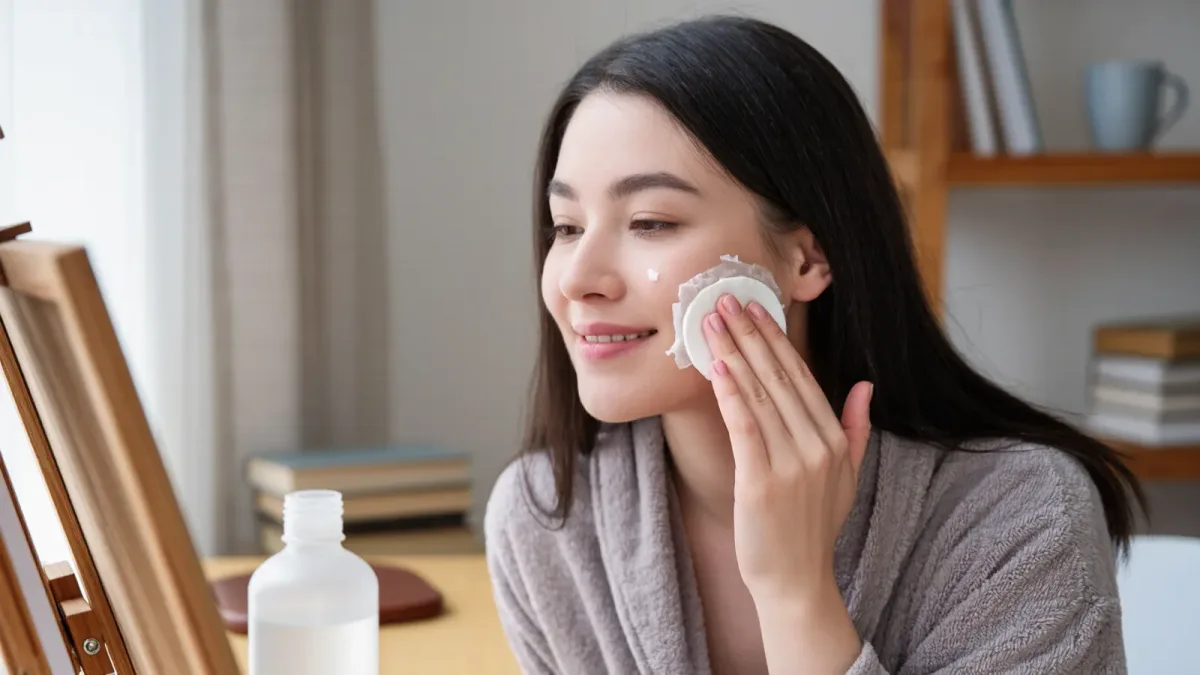
No. One leave-on AHA product is enough, and stacking several formats is the most common way beginners end up over-exfoliated. A cleanser with a low percentage of acid that rinses off barely exfoliates at all, and pads make it easy to apply more than intended. A single serum or toner with one named acid at a stated percentage gives you control, which is the whole game with exfoliation.