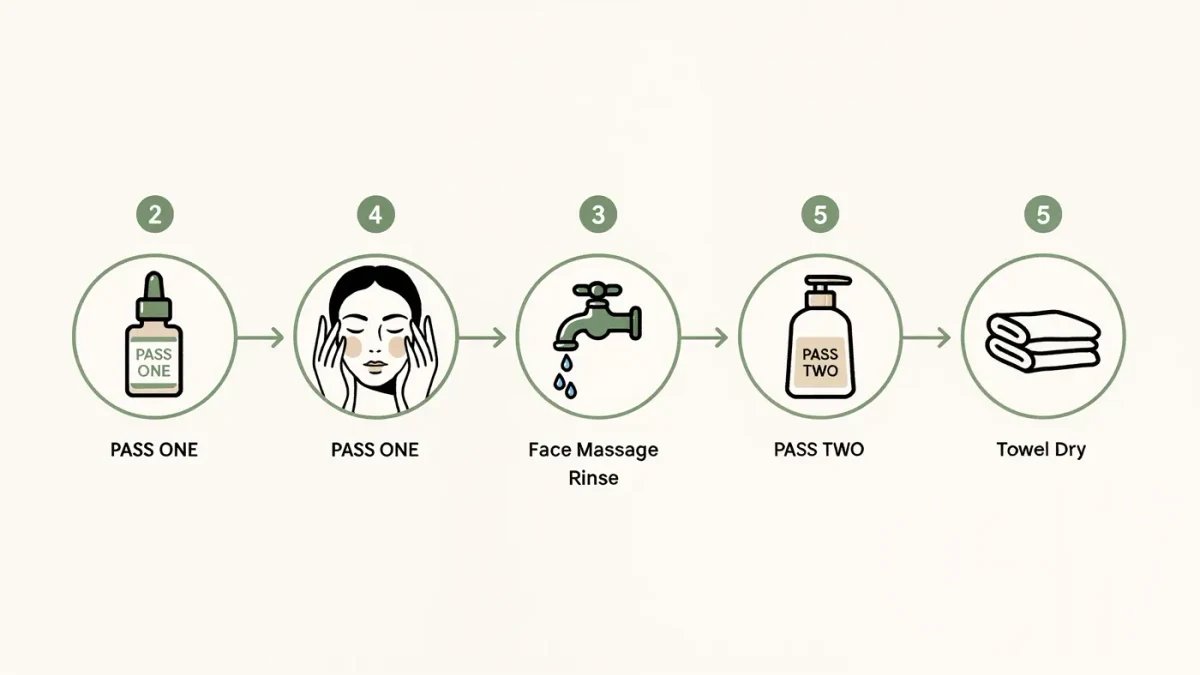
To remove makeup properly, use two passes: a makeup remover that dissolves the products, then a gentle cleanser that washes the remover and the residue away. One pass is not enough, because removers lift pigment and film-formers but leave their own layer behind, and cleansers alone struggle against waterproof mascara and long-wear foundation. A full two-pass routine takes about three minutes in the evening (FDA, 2026).
BEAUTYISE publishes information, not medical advice. If removal leaves your skin stinging, red, or tight, that is a signal about products or friction, not a requirement of the method.
Why does one cleanse leave residue behind?
Modern makeup is engineered to survive oil, water, and friction for ten or more hours. Long-wear bases and waterproof mascaras use film-forming ingredients and waxes that a standard foaming cleanser cannot fully lift, so the visible makeup may be gone while an invisible film stays. That film interferes with your evening skincare and, around the eyes, mixes with oils to form debris along the lash line. The two-pass method exists precisely because the job splits into dissolving and washing, and no single product does both perfectly.
Which remover matches which product?
| What you wore | Best remover | Notes |
|---|---|---|
| Waterproof mascara and long-wear lipstick | Biphase or oil-based remover | Shake biphase; hold the pad on the lash line before wiping |
| Standard foundation and powder | Micellar water or cleansing oil | Micellar for light days, oil for full face |
| Heavy or sunscreen-heavy base | Cleansing oil or balm | Massage onto dry skin only |
| Minimal makeup or none | Gentle cleanser alone | One pass is fine on bare skin |
The two-pass method, step by step
- Pass one: dissolve (90 seconds). Apply your remover to dry skin. Massage cleansing oil or balm over the whole face with dry hands, or hold a soaked cotton pad over closed eyes for twenty to thirty seconds before wiping downward, so mascara dissolves instead of smearing.
- Rinse the first pass. Add a little warm water to emulsify oils and rinse, or remove micellar residue with a soft cloth. Water should be lukewarm; hot water strips lipids and leaves skin tight.
- Pass two: cleanse (60 seconds). Massage a gentle cleanser over damp skin for about sixty seconds, covering the hairline, jawline, and the sides of the nose where residue collects. This pass removes the remover, which is the point.
- Rinse and check. Rinse with lukewarm water and run a clean hand over your skin. Any squeaky tightness means the cleanser is too harsh; any slip means residue remains.
- Dry and continue. Pat, do not rub, with a clean towel, then apply your evening skincare while the skin is still slightly damp.
Related stories: How to Make Makeup Last All Day: Seven Steps From Skin Prep to Setting · Makeup for Beginners: A Five-Step Routine That Takes Ten Minutes.
What about the eye area?
The skin around the eyes is thin and the lash line collects debris, so eye makeup removal deserves its own small routine. Soak a dedicated cotton pad, press it against the closed eye for twenty to thirty seconds, then wipe downward in one motion; repeat with a fresh pad rather than scrubbing. The FDA advises discarding any eye cosmetic that irritates you and never sharing eye products, since bacteria transfer easily near the eye (FDA, 2026). Avoid pressing or pulling the lid itself; the goal is dissolution, not friction.
Is double cleansing the same thing?
Essentially yes: double cleansing is the skincare-world name for the same structure, typically an oil-based first pass followed by a water-based second. The two-pass method above is double cleansing framed around makeup removal. On days you wear no makeup, a single gentle cleanse is enough, and double cleansing every night is unnecessary for most people.
Which mistakes work against you?
- Using makeup wipes as the whole routine. Wipes dissolve makeup but leave their own residue and rely on rubbing, so treat them as pass one in an emergency, not the entire job.
- Scrubbing waterproof mascara off dry lashes. Soak first; the hold breaks down in seconds once the remover sits on it.
- Hot water. It feels effective and strips the skin barrier at the same time.
- Skipping the hairline and jaw edges. Missed base along these lines is what causes next-morning breakouts along the perimeter.
- Sleeping in makeup after a late night. Keeping remover and cotton pads by the bed lowers the barrier to doing it properly.
How do you know your removal is working?
Three checks: your towel shows no pigment after patting dry, your skin feels comfortable rather than tight, and there is no shadow of mascara along the upper lash line in the morning. If a cotton pad with toner still comes away with color after cleansing, your second pass needs more time or a different cleanser.
FAQ
Are makeup wipes bad for your skin?
Not inherently, but they are incomplete. They dissolve pigment while leaving surfactant residue, and the wiping motion adds friction. Use them as a first pass or in emergencies, then cleanse when you can.
Do I need to remove sunscreen too?
Yes. Water-resistant sunscreens behave like long-wear makeup and sit on the skin deliberately. If your sunscreen claims water resistance, treat it as makeup and use the two-pass method.
Can I use coconut oil to remove makeup?
It dissolves makeup, but it is not formulated for skin and sits heavily, which can contribute to clogged pores for some people. A formulated cleansing oil emulsifies and rinses cleanly, which coconut oil does not do.
How fast should I remove makeup after coming home?
As soon as practical. There is no fifteen-minute rule, but every hour in makeup is another hour of friction, oil, and film on your skin. Removing it before dinner beats removing it before bed.