Your skin barrier is the outermost layer of skin, and when it is damaged you feel it as tightness, stinging when you apply products, flaking, and redness that will not settle. Repair takes fewer products and roughly two to four weeks of consistency in most mild cases: a gentle cleanser, a ceramide moisturizer twice a day, daily sunscreen, and a pause on all actives. The structure itself is well described in dermatology references such as StatPearls, which describes the epidermis and its lipid matrix as the skin's water-holding, protective outer layer.
If you have open cracks, oozing, spreading rash, or pain, that is a job for a dermatologist or primary care clinician, not a routine adjustment.
What is the skin barrier, exactly?
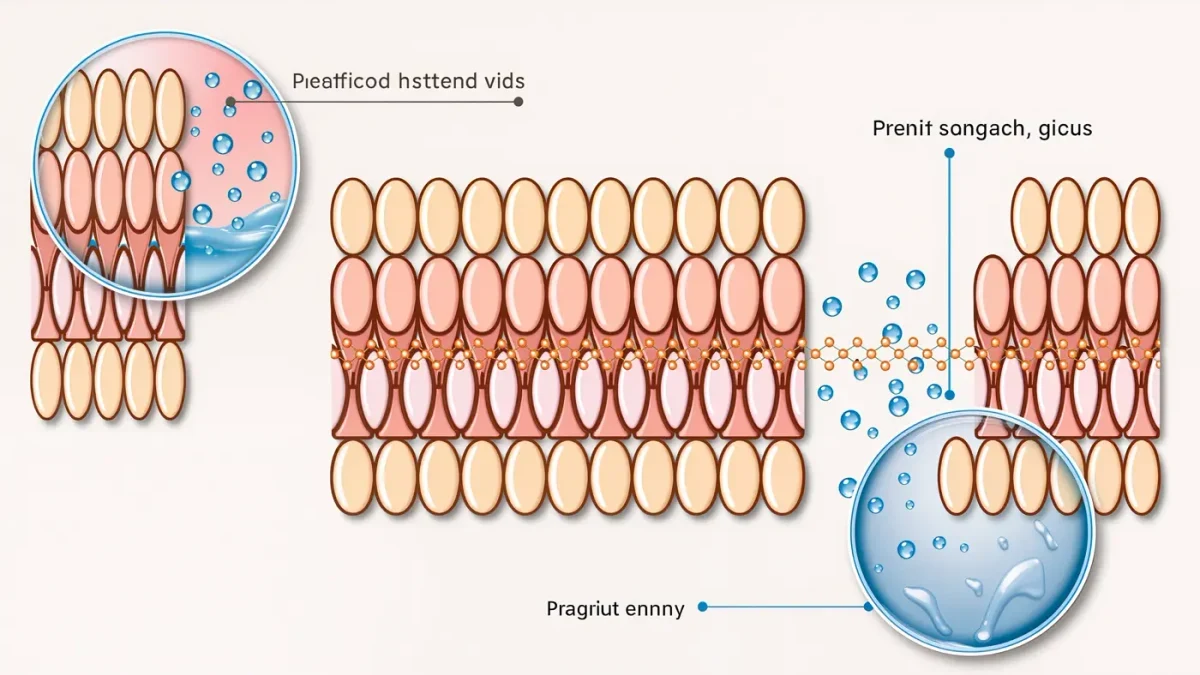
Dermatologists describe the outer skin with the brick-and-mortar model: corneocytes, which are flattened dead skin cells, act as bricks, and a lipid mortar of ceramides, cholesterol, and fatty acids holds them together. This assembly keeps water in and irritants, allergens, and microbes out. Physiology references such as StatPearls describe how this layer regulates water loss and shields the body. When the lipids are stripped or the cell turnover is disrupted, water escapes faster and irritants get in more easily, which is why a damaged barrier feels both dry and reactive at the same time.
What are the signs your barrier is damaged?
- Stinging or burning when you apply products that used to feel fine, even plain moisturizer.
- Tightness within minutes of washing, and flaking that moisturizer only partially smooths.
- Redness and increased reactivity, including breakouts in unusual places or itching.
- Products seeming to vanish, because dehydrated skin absorbs water-based layers quickly without feeling restored.
A single tight evening is not damage; two or more weeks of these symptoms usually is.
What causes barrier damage?
The usual suspects are over-cleansing, water that runs hot, and too many actives layered too often: exfoliating acids, retinoids, and vitamin C each have real benefits, but stacked daily on sensitive skin they overwhelm the surface. Winter air and indoor heating contribute, as does scrubbing with physical exfoliants or rough brushes. The FDA's guidance on alpha hydroxy acids notes that these ingredients can increase skin's sensitivity to sun and cause irritation, particularly at higher concentrations, which is one documented route to an overwhelmed surface.
The repair plan, week by week
Strip the routine to four items and hold it steady. Progress is usually noticeable within days and substantial within two to four weeks for mild damage; deeper irritation takes longer.
- Stop all actives. No exfoliating acids, no retinoids, no vitamin C, no scrubs. This is the hardest step emotionally and the easiest technically. Expect to hold it for at least a week after the stinging stops.
- Cleanse once a day, gently. In the evening use a mild, fragrance-free, non-foaming cleanser; in the morning rinse with lukewarm water. Keep contact time short and water temperature moderate.
- Moisturize twice a day on damp skin. Choose a fragrance-free cream with ceramides plus humectants such as glycerin, and if skin feels raw, seal it at night with a thin layer of petrolatum-style ointment over the cream.
- Wear sunscreen. Damaged skin burns more easily, and a sunburn on a compromised barrier sets recovery back. Gentle, mineral-based SPF 30 formulas are often better tolerated during repair.
When can you add actives back?
Wait until stinging and flaking have been gone for about a week, then reintroduce one active at a time, at its lowest strength and two or three nights a week. Watch for the return of tightness or tingling; if it comes back, drop back to the repair routine for another week. This slow cadence is not caution for its own sake. Barrier recovery depends on the skin rebuilding its lipid mortar, and repeatedly stripping it restarts the clock.
| Stage | Symptoms | Action |
|---|---|---|
| Mild | Tightness, mild flaking | Four-product routine, pause actives 1–2 weeks |
| Moderate | Stinging, redness | Same routine plus petrolatum seal at night, 2–4 weeks |
| Severe | Cracks, oozing, pain | See a dermatologist |
Which ingredients support repair?
Ceramides are the most directly on-target: they are the same lipids the barrier uses, and clinical studies of ceramide-containing moisturizers show improved hydration and reduced water loss in dry skin. Glycerin and hyaluronic acid supply humectant moisture, and petrolatum reduces evaporation while skin rebuilds. Panthenol and colloidal oatmeal appear in many soothing formulas and have a reasonable tolerance record. None of these need to come from an expensive jar; drugstore barrier creams contain the same core ingredients as luxury ones.
How do you prevent the next relapse?
Keep the permanent habit set small: gentle cleansing, moisturizer, and daily SPF, with actives added in measured doses rather than stacked. If a product makes your face tingle warmly and pleasantly, some marketing calls that activation; dermatology calls it irritation, and it is the earliest warning the barrier gives. Track how many nights a week you use each strong product, and give your skin plain weeks in between seasons of heavier use.
A damaged barrier does not need rescue products. It needs the routine you had before you added the seventh step.
FAQ
How long does skin barrier repair take?
Mild damage often settles within two to four weeks of a stripped-down routine. Deeper irritation, especially after strong acids or prescription treatments, can take six weeks or more, and a dermatologist should assess anything cracked or oozing.
Can I keep using retinol with a damaged barrier?
Pause it. Retinoids speed cell turnover and commonly irritate already-compromised skin. Reintroduce the lowest strength a couple of nights a week only after stinging has been gone for about a week.
Is my skin purging or is my barrier damaged?
Purging, a temporary flare from faster cell turnover, shows as breakouts in usual areas while the skin otherwise feels comfortable. Stinging, flaking, and redness from products that used to be fine point to barrier damage instead.
Do I need a special barrier-repair serum?
No. A fragrance-free ceramide moisturizer plus an occlusive at night covers the mechanism. Serums can be pleasant, but the ingredients that matter, ceramides, glycerin, and petrolatum, are standard in drugstore creams.