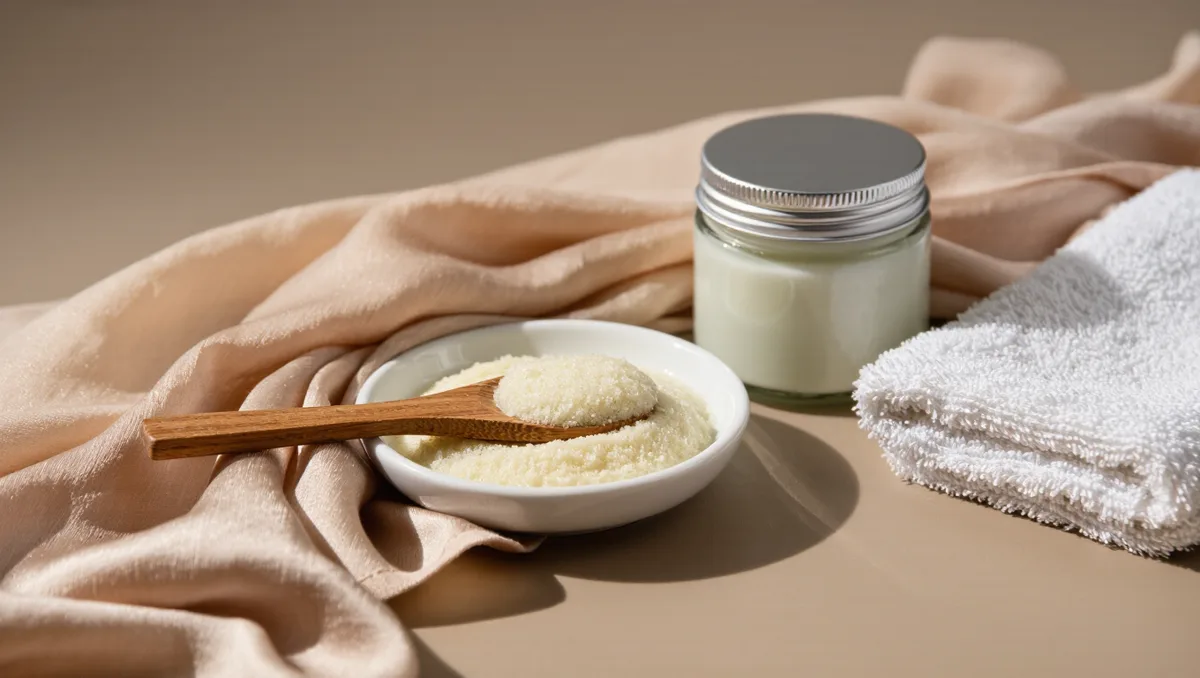
To exfoliate safely, pick one gentle product, use it once or twice a week, and stop for at least a week whenever your skin stings, flakes, or feels raw. Skin sheds old cells on its own roughly every four weeks in healthy adults, so exfoliation is a nudge, not a necessity. The American Academy of Dermatology's patient guidance on exfoliation opens with the same principle: choose a method that suits your skin type, be gentle, and follow with moisturizer and sunscreen.
If exfoliation leaves broken skin, lasting redness, or pain, treat it as an injury and let it heal, or have a dermatologist look at it.
What does exfoliation actually do?
Exfoliation removes some of the dead cells sitting on the surface. Done lightly, it can smooth texture, soften the look of dark spots, and help pores appear less clogged. Done aggressively, it strips the barrier faster than skin rebuilds it, and the result is stinging, redness, and often more breakouts. The difference between benefit and damage is mostly frequency and pressure, not the price of the product.
Physical or chemical: which type should you choose?
Physical exfoliation uses abrasion: scrubs with fine particles, a soft washcloth, or a konjac sponge. It works immediately, is easy to understand, and is also the easiest type to overdo. Scrubs with sharp particles, most famously crushed nut shells, create micro-tears, which is why dermatology guidance favors smooth, fine textures applied with zero pressure.
Chemical exfoliation uses acids or enzymes to loosen the bonds between surface cells. The main families:
- AHAs (alpha hydroxy acids), such as glycolic and lactic acid, are water-soluble and work on the surface, improving texture and tone. The FDA notes that AHAs can increase sensitivity to sun, which makes daily SPF non-negotiable when you use them.
- BHAs (beta hydroxy acids), mainly salicylic acid, are oil-soluble and work inside pores, which suits oily and acne-prone skin.
- Enzymes, typically from fruit such as papaya and pineapple, are the mildest option and a common starting point for sensitive skin.
How often should you exfoliate?
Once a week is the correct starting point for almost everyone, increasing to two or three times a week only if your skin stays calm and comfortable over several weeks. Oily and thicker skin generally tolerates more frequent use; dry, sensitive, or rosacea-prone skin often does best with a washcloth once a week or chemical exfoliants no more than weekly. Acne-prone skin is a special caution: scrubbing active breakouts, in the American Academy of Dermatology's words, can make acne worse by increasing irritation.
| Skin type | Good first choice | Starting frequency |
|---|---|---|
| Oily, acne-prone | Salicylic acid (BHA) | 1x per week |
| Dry, dull | Lactic acid (gentle AHA) | 1x per week |
| Sensitive | Enzyme or washcloth | Every 1–2 weeks |
| Normal, combination | AHA or gentle scrub | 1–2x per week |
The safe method, step by step
- Cleanse first with a gentle cleanser and lukewarm water, and pat until just damp.
- Apply your one exfoliating product evenly, by hand or with a cotton pad for liquids. For acids, a thin layer is the correct dose; more product means more irritation, not more smoothing.
- Follow with moisturizer within a minute to buffer the surface and restore comfort.
- Apply SPF 30 the next morning and every morning after, since freshly exfoliated skin is more sun-sensitive, a warning the FDA attaches specifically to AHA products.
- Keep the rest of the week simple: cleanser, moisturizer, sunscreen. Do not combine your exfoliating night with retinoids or vitamin C until you know how your skin responds.
For a physical method, wet the skin first, use your fingertips or a soft cloth in light circles for under 30 seconds, and let the product or texture do the work. If your arm is moving fast, the pressure is already too much.
What are the signs you are over-exfoliating?
Watch for a shiny-but-tight look, stinging when plain water or moisturizer touches your face, new flaking, unusual breakouts, and redness that lasts hours. Any two of those together mean you should stop all exfoliation and all actives, drop back to a gentle cleanser and a ceramide moisturizer twice a day, and let the barrier rebuild, which usually takes two to four weeks in mild cases. Sunscreen stays daily throughout, because healing skin is especially vulnerable to UV.
Which combinations should you avoid?
Three pairings cause most trouble for beginners. Scrubbing on the same day as an acid exfoliant doubles the surface removal. Layering an exfoliating acid directly under or over a retinoid stacks two irritants into one evening. And using multiple acid products from different steps of a routine, for example an acid toner plus an acid serum, can exceed the weekly dose you intended without feeling like it. Choose one exfoliant per week of your life, and track it if you use other actives.
Exfoliation is the one step where more discipline, not more product, produces the glow people are chasing.
Does body skin follow the same rules?
Broadly yes, with more tolerance. The skin on your arms, legs, and body is thicker than facial skin, so physical methods such as a dry brush or a sugar scrub in the shower are generally safe there, and rough zones like elbows, knees, and heels often need regular exfoliation plus a urea or lactic acid lotion to stay smooth. Two rules still apply: moisturize right after, since freshly exfoliated skin loses water quickly, and never scrub over active breakouts on the chest and back, where the same irritation logic as the face holds.
FAQ
Can I exfoliate every day?
Daily exfoliation is rarely advisable outside very mild, specially formulated products used under professional guidance. Most people get all the benefit they need from one or two sessions a week.
Should I exfoliate in the morning or at night?
Night is the conventional slot. It leaves time for skin to settle overnight and keeps the fresh surface out of midday sun, though daily sunscreen covers you either way.
Do I need to exfoliate before applying self-tanner or makeup?
A light exfoliation a day before an event or self-tanner helps the surface look even, because the product catches less on dry patches. Keep it gentle, and moisturize well afterward.
Is burning normal when using an acid?
Mild tingling that fades within a minute or two is common with acids. Burning that stings, lasts, or leaves redness is a signal to rinse off and stop using that product.