Fast fashion's documented footprint sits in three places: the factories where clothes are sewn, the water the industry draws, and the landfill that takes the leftovers. The pace is the driver. The United Nations Environment Programme reports that shoppers now buy about 60% more clothing than in the past and keep each piece about half as long.
This explainer collects what named reports document about that footprint: the labor record, the water drawn for fibre and dyeing, the waste that reaches landfill, and how much comes back as new clothing. The figures below come from the United Nations Environment Programme, a 2020 scientific review, and BBC reporting.
What does fast fashion mean?
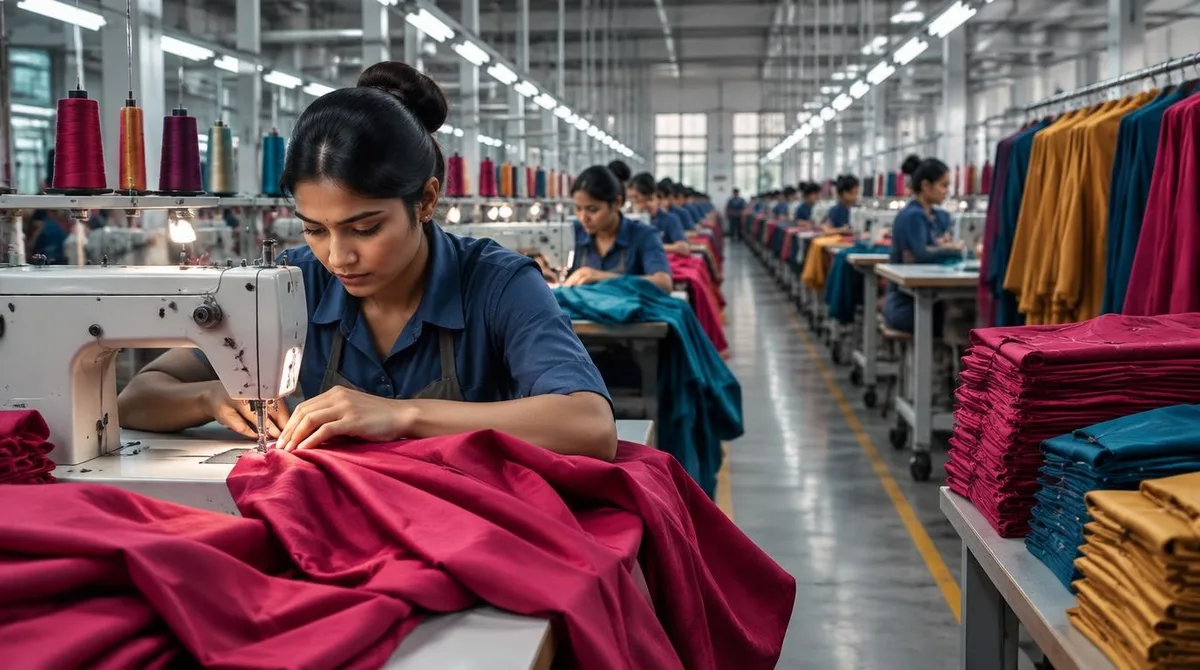
Fast fashion is the low-cost, quick-turnover model of clothing: cheap making, fast supply chains, and a constant supply of new trends. It grew in the late 20th century as the clothing industry adopted cheaper manufacturing techniques, more efficient supply chains, quick response methods, low-cost labor from Asia, and cheaper petroleum-based synthetic fibers, per the standard reference work. Companies with a strong social media presence now push the cycle faster still, a model described as ultra-fast fashion.
What do the labor records show?
The clearest entry in that record is a failure. In 2013, the Rana Plaza building collapsed in Bangladesh, and it stands as the deadliest garment-related accident in world history, per the historical record. The collapse drew attention to the safety side of an industry built on speed, where production leans on low-cost labor and fast adjustments to sales.
The model was shaped by that labor geography. Cheap, quick production depended on low-cost labor markets in Asia, and the reports that track the industry treat working conditions as part of its cost structure, not a side note. This connects to our earlier piece, Paris Fashion Week Opens with Dior's Flower-Shaped Dresses for Autumn 2026.
How much water does the industry use?
A scientific review published in 2020 put the fashion industry's use at about 79 trillion litres of water a year. The same review named water consumption, chemical pollution, carbon emissions, and textile waste as the major impacts, per the reference summary. Pressure lands at every stage: fibre production, dyeing, manufacturing, transportation, use, and disposal. For related coverage, see Versace Names Pieter Mulier Chief Creative Officer in a Five-Year Reset.
What happens to thrown-away clothes?
Most never come back as clothing. An estimated 92 million tonnes of textile waste is created each year, and the equivalent of a rubbish truck full of clothes ends up on landfill sites every second, per BBC reporting. In the United States, about 85% of discarded textiles, roughly 13 million tonnes in 2017, are dumped or burned.
Recycling into new clothing is rare. As of 2015, less than 1% of used clothing was recycled material to material, meaning turned back into new fabric for garments, per the same report. Old wool can become carpet and cashmere can become suits, but true clothing-to-clothing recycling stays a sliver of the total.
The footprint of one garment, in order
- 1. Fibre is grown or extruded, and fibre production draws water at the very start of the chain.
- 2. Fabric is dyed and finished, one of the stages the 2020 review names as a pressure point.
- 3. Garments are sewn in low-cost labor markets, often far from the shop that sells them.
- 4. Trends turn over, and clothes are replaced sooner: about 60% more buying, half the keeping, per UNEP.
- 5. Discards leave the wardrobe, and a truckload a second reaches landfill or incineration.
Each stage is documented by a named report, and the numbers line up across sources rather than contradicting each other.
Conclusion: the numbers behind the wardrobe
Fast fashion's footprint is documented rather than debated: a factory record that includes the deadliest garment accident in history, water drawn in the trillions of litres, waste measured in millions of tonnes, and a truckload landfilled or burned every second. Less than 1% of used clothing turns back into new clothing.
For a wardrobe, the numbers read as turnover: more buying, less keeping, and a disposal system that absorbs the difference. The reports agree on the shape of that chain, from fibre to landfill gate. What changes next belongs to law, design, and demand, and the record so far is the baseline they start from.