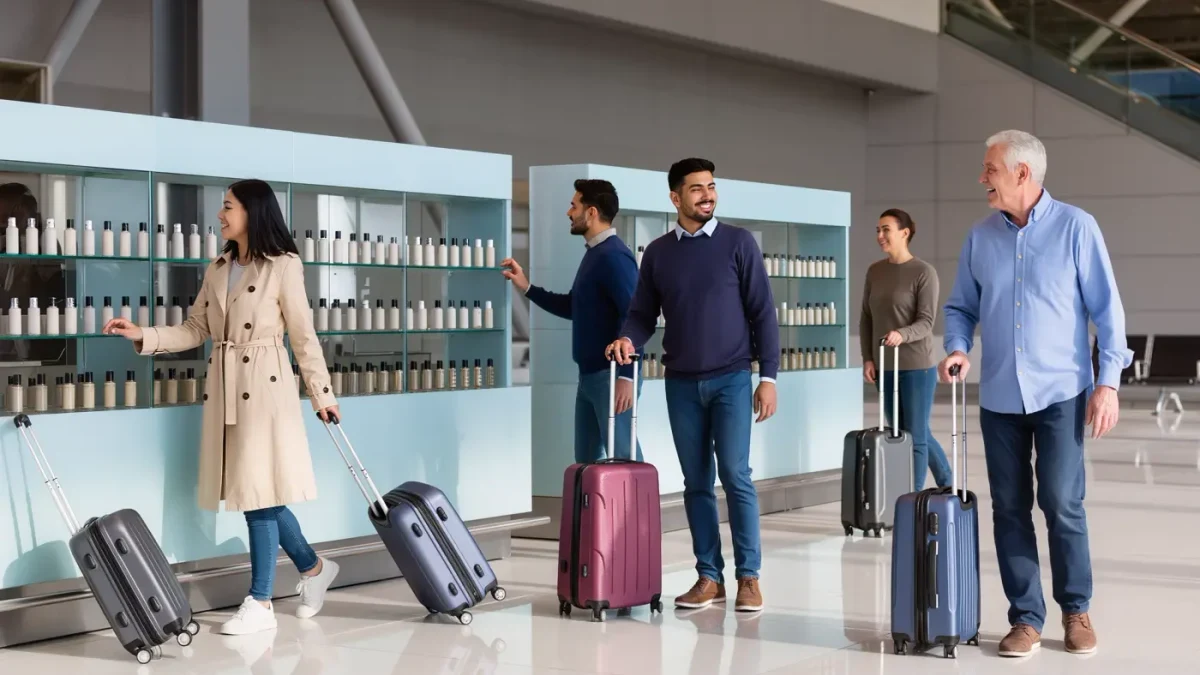
Luxury brands are booking a drop in travel-retail sales as the Middle East conflict cuts airport passenger flows, per Reuters, April 15, 2026. Duty-free operators including DFS and Avolta reported declining sales of premium perfumes, spirits and fashion, and brands from Gucci to Estee Lauder's Jo Malone felt the shortfall. For travelers, the change affects where the classic airport bargain actually exists in 2026.
Travel retail matters out of proportion to its size because airports concentrate high-margin sales: brands sell full-price inventory to a captive, international audience without paying for standalone stores. When passenger numbers fall on affected routes, the loss shows up quickly in brand results, as the April 15 reporting demonstrated. Airlines have rerouted flights away from Middle Eastern hubs, which historically funneled large volumes of Chinese, Indian and European travelers through duty-free halls.
Which categories are hit hardest?
Beauty and fragrance lead the list. Perfume, skincare gift sets and travel-sized luxury cosmetics are the backbone of duty-free revenue, and per Reuters, April 15, 2026, premium perfume sales at major operators declined alongside spirits. Fashion and accessories sold in airport boutiques, including Gucci, also slowed, since unplanned luxury purchases depend on foot traffic rather than shopping lists.
For routine-builders, this matters at the checkout: travelers who planned to restock a favorite serum or fragrance at the airport may find thinner selections or weaker discounting in the near term, because operators protect margin when volumes fall.
Are duty-free prices still worth it in 2026?
The honest answer is that duty-free is a discount on tax, not automatically a discount on price. With sales under pressure, some operators deepen promotions to move stock, while others hold the line. A practical method is to know the domestic price, including sales tax, of any item before flying; savings above roughly 15 to 20 percent justify the purchase, and anything less can wait for an online promotion with a better return policy.
Return rules are the second trap. Duty-free purchases often cannot be returned, while the same item bought from a brand's website usually can within 30 days. For skincare, where a formula may irritate or simply underperform, buying at the airport removes the safety net that routine-builders rely on.
Will airport shopping recover?
It depends on route restoration, not consumer taste. Duty-free operators expect volumes to track flight schedules back through affected hubs once routes normalize, and brands treat the current shortfall as temporary. Per Reuters, April 15, 2026, the sales declines were attributed directly to conflict-related travel patterns rather than a collapse in demand for luxury goods overall. Travelers planning big beauty or fragrance purchases this year should price-check online first and treat the airport as a convenience stop, not the guaranteed bargain it once was.