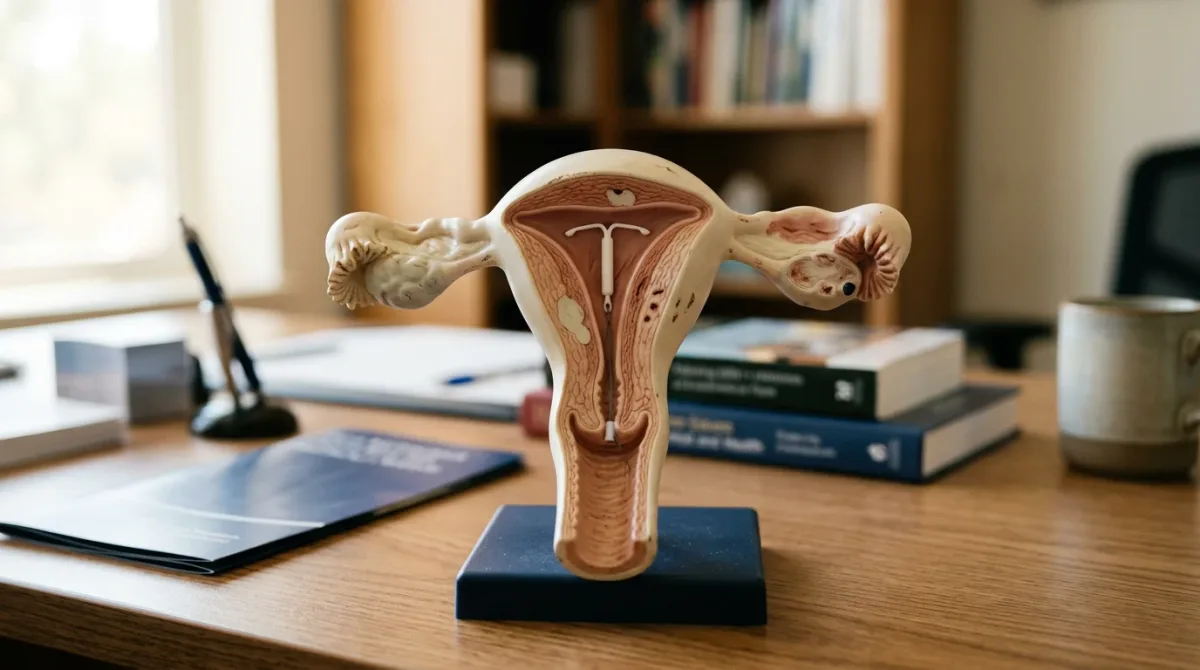
Cervical cancer prevention gets discussed constantly, but the mechanism behind one of its most effective tools — the HPV vaccine — is often skipped over. Understanding how and when it works helps explain why timing keeps coming up in every clinical recommendation about it, and why vaccination and screening are described as partners rather than substitutes for each other.
What does the HPV vaccine actually do in the body?
The vaccine trains the immune system to recognize specific strains of human papillomavirus before the body ever encounters them naturally. According to Mayo Clinic, it works by giving the immune system a preview of certain HPV strains so it can respond faster and more effectively if exposure happens later. It does not treat an infection that is already present — it only prevents new ones from taking hold.
That distinction matters because nearly all cervical cancer traces back to persistent, untreated HPV infection. A federally published analysis of national screening and vaccination data notes that roughly 99.7% of cervical cancers stem from untreated HPV infection, which is why blocking new infections has such an outsized effect on long-term cancer risk.
How much does HPV vaccination lower cervical cancer risk?
The clearest evidence comes from a Swedish population study covering nearly 1.7 million women ages 10 to 30, tracked between 2006 and 2017. Led by Jiayao Lei, PhD, of the Karolinska Institute and published in the New England Journal of Medicine, the study found cervical cancer rates were 63% lower among vaccinated women compared with unvaccinated women overall.
The numbers behind that figure are stark: among roughly 528,000 vaccinated women, 19 developed cervical cancer, compared with 538 cases among about 1.14 million unvaccinated women. The vaccine used in the study targeted HPV types 16 and 18, which together cause about 70% of cervical cancers.
Why does age at vaccination change the outcome so much?
In the same Swedish study, women vaccinated before age 17 saw close to a 90% reduction in cervical cancer incidence — notably higher than the 63% reduction seen across the full vaccinated group. More than 80% of the vaccinated participants in the study received their dose before age 17.
The explanation ties back to how the vaccine works: it prevents infection, it does not clear an infection that already exists. Vaccinating before someone is likely to have been exposed to HPV gives the immune training a clean start, which is why a federally published data analysis separately found early vaccination linked to more than an 80% reduction in overall cervical cancer risk alongside a 40% reduction in precancerous changes.
Does the vaccine mean Pap tests are no longer needed?
No. Mayo Clinic is explicit that the vaccine does not replace Pap testing, and routine cervical cancer screening starting at age 21 remains part of standard preventive care regardless of vaccination status. The vaccine targets the specific HPV types responsible for most cervical cancers, but it does not cover every cancer-causing strain, and screening catches changes that develop from strains outside its coverage.
The two tools work on different timelines: vaccination lowers the chance an infection ever takes hold, while screening catches cell changes that are already underway so they can be treated before becoming cancer. Screening has a strong track record on its own: the same federally published data analysis notes that Pap testing has historically been linked to roughly a 70% reduction in cervical cancer incidence and mortality, independent of vaccination.
That analysis also points out why catching changes early still matters so much even in a vaccinated population — when cervical cancer is diagnosed at an early stage, five-year survival reaches about 91%, compared with an overall five-year survival rate of roughly 67.4% across all stages combined. For women 30 and older who are at higher risk, guidance summarized in that analysis describes combining HPV-DNA testing with a Pap test as one screening approach, a decision best made with a clinician based on individual history.
Who is the vaccine recommended for, and until what age?
The CDC recommends routine HPV vaccination at ages 11 to 12, and the vaccine is approved for people ages 9 through 45, per Mayo Clinic. Dosing differs by age: two doses spaced 6 to 12 months apart for ages 9 to 14, three doses over six months for ages 15 to 26, and an individual risk discussion with a clinician for ages 27 to 45, since benefit at older ages depends on prior HPV exposure.
Despite the recommendation window starting at 9, U.S. vaccination coverage has lagged: as of 2022, about 76% of adolescents ages 13 to 17 had received at least one dose, with some states reporting completion rates below 70%, according to the same federally published analysis. That gap is part of why public health messaging keeps circling back to timing — every year a first dose is delayed past early adolescence is a year the vaccine's strongest protective window has already started narrowing.
When to talk to a clinician
This article is general health information, not medical advice, and it is not a substitute for guidance from a licensed clinician who knows your health history. A clinician can help you or your child figure out whether HPV vaccination is appropriate, work out catch-up dosing if the initial series was missed, and confirm how vaccination status should factor into a personal cervical cancer screening schedule. Questions about vaccination after age 26, prior HPV exposure, or scheduling around pregnancy are all worth raising directly with a provider rather than deciding alone.
For a related prevention perspective, read Identifying Biomarkers for Early Detection of Diabetic Complications.
For more context, read How does an mRNA vaccine actually work?.
For more context, read What Does Vitamin D Actually Do?.
For more context, read What the Research Actually Says About Creatine.