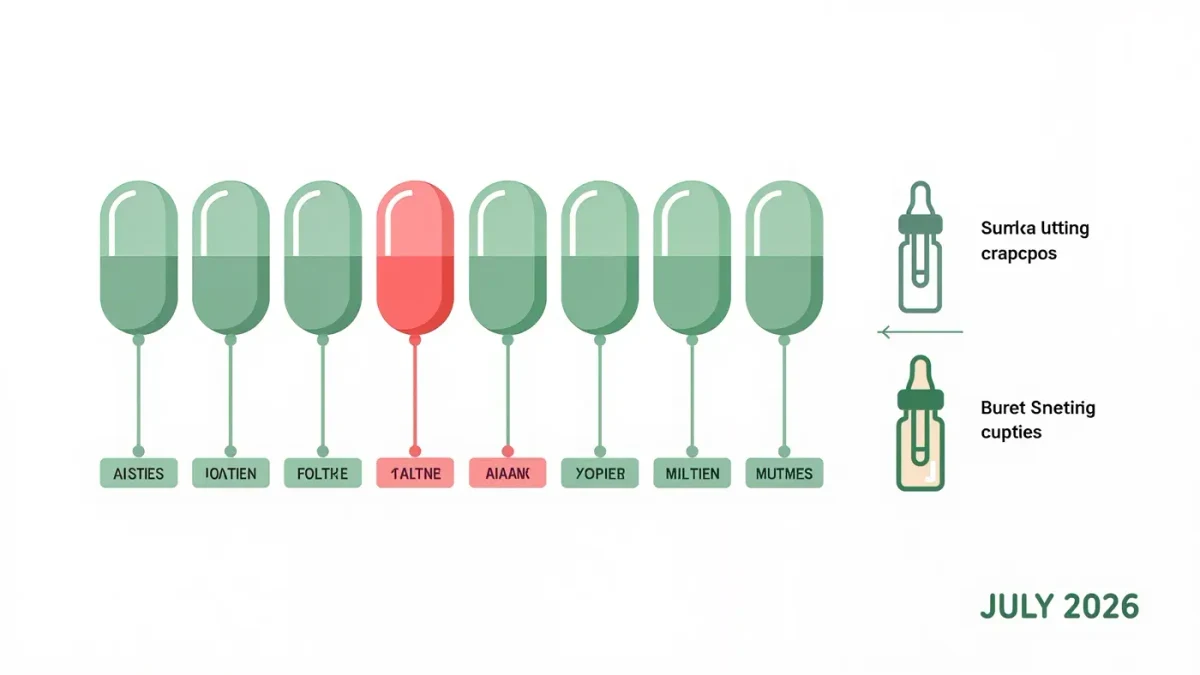
An FDA advisory committee voted on July 23 and 24, 2026 to recommend adding six of seven injectable peptides to the agency's list of substances that compounding pharmacies may prepare, per Reuters. The panel's narrow majority asked the agency to allow compounding of the unapproved peptides Epitalon and Semax, which are marketed for anti-aging purposes, per the Reuters report of July 24, 2026. The committee, which reviews bulk drug substances for what is known as the 503A Bulks List, voted in favor of peptides including BPC-157, KPV, TB-500, and MOTS-c, and against one substance, per meeting coverage.
Peptides discussed here are injectable substances evaluated as drugs, not cosmetic ingredients, and nothing in the committee's vote makes any of them proven, approved, or safe for skin or aging concerns.
What did the FDA panel actually decide?
The Pharmacy Compounding Advisory Committee held a two-day meeting, listed by the FDA for July 23-24, 2026, to consider whether seven peptides should go on the Bulks List, which lets specialized pharmacies prepare them from bulk ingredients. Per Reuters, the panel recommended six of the seven, acting against the skepticism FDA staff had expressed about the quality of evidence. The votes are recommendations; the FDA makes the final call, and the agency is not bound to follow the panel.
Why does a beauty audience care?
Peptides have become one of the loudest crossover trends between wellness clinics and skincare marketing. Injectable peptides such as BPC-157 are promoted by influencers as recovery and anti-aging tools, and the same vocabulary, peptides that signal and repair, is used to sell face creams. Per Reuters coverage of the meeting, consumer demand has persisted even though most of these substances lack standard drug approval. The committee's votes could widen legal access through compounding pharmacies, which in turn would likely intensify beauty and wellness marketing around them.
What this changes for your routine
Your skincare routine is unaffected by this vote, because topical cosmetic products are regulated separately from compounded injectable drugs. Peptides in serums, such as copper peptides or signal peptides, sit on the surface of the skin and are a different category entirely from the injected substances the panel discussed. The practical guidance stays steady: topical peptide serums are optional extras with modest evidence, not essentials; anything injected should involve a licensed medical provider; and an advisory committee vote is a regulatory step, not proof that a substance works or is safe.