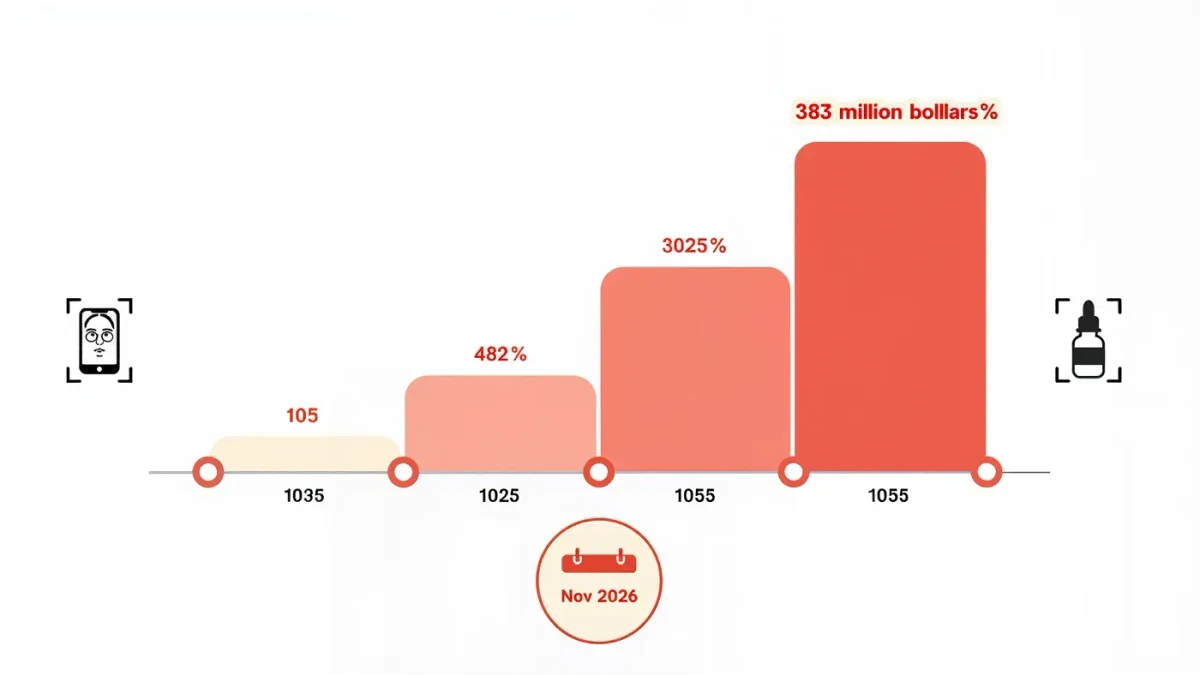
L'Oréal announced on January 21, 2026 that it will build its first global beauty tech hub in Hyderabad, India, with an initial investment of more than 35 billion rupees, about $383 million. Per Reuters, the announcement was made during the World Economic Forum meetings in Davos, and the centre is expected to open in November 2026 with the investment spread over five years.
The hub will be a global capability centre focused on artificial intelligence work for beauty: skin diagnostics that read photos of skin, personalized product recommendations, and supply-chain forecasting, per Reuters and company statements. The company positions the site as the first beauty-industry capability centre dedicated to AI development at this scale.
Why is the biggest beauty company betting on India?
India is one of the fastest-growing beauty markets, and Hyderabad already hosts capability centres for large technology and consumer companies. Per L'Oréal, the country offers both a deep pool of AI engineers and a huge base of new beauty consumers, which lets the company develop and test tools close to a fast-moving market. The announcement came the same week the group reported continued growth driven by emerging markets.
What will the hub actually build?
Per Reuters, early work centers on AI-powered skin diagnostics, personalized product development, and supply-chain intelligence. In practice that means tools like camera-based skin analysis in an app, algorithms that match foundation shades from a selfie, and systems that predict which shades and formulas a retailer will need next season. The centre is set to employ engineers and data scientists rather than formulators, and its output is expected to feed into L'Oréal brands worldwide, from Lancome to Maybelline.
What this changes for your routine
For a beginner, this kind of investment usually shows up as better free tools, not new obligations. Shade-matching apps and skin quizzes built on larger datasets tend to make fewer bad recommendations, which matters when you are choosing your first foundation or serum and have no baseline for comparison. Expect L'Oréal-owned apps and retailer tools to get more accurate over the next few years. The advice stays the same: treat AI shade matches and skin scans as a starting point, test products in person when you can, and change one product at a time so you can tell what is actually working.